How to Select Deep Groove Ball Bearings for Robotic Arm Joints
Robotic arms depend on joints that must move smoothly, hold position precisely and keep working for millions of cycles. In many joint designs, the workhorse component is the
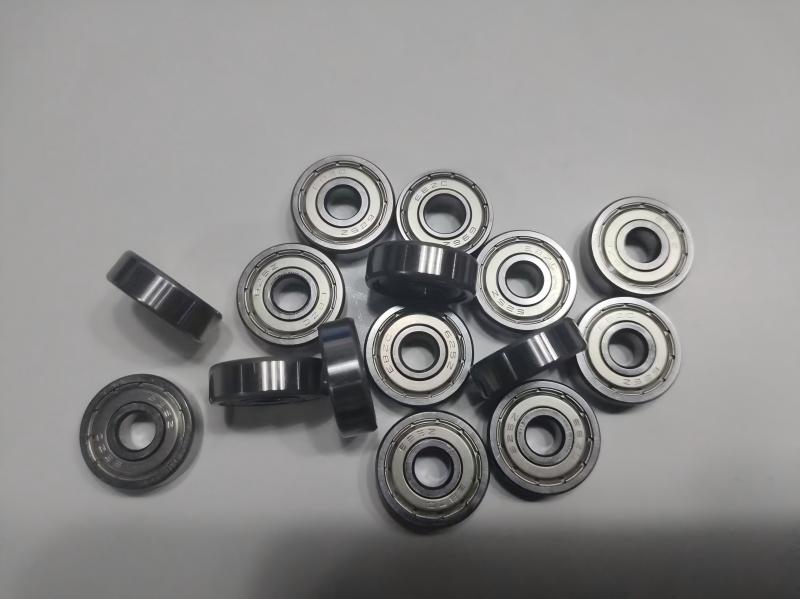
deep groove ball bearing — a compact, low-friction and cost-effective choice that handles both radial and moderate axial loads.
But not every deep groove ball bearing fits a robot joint. Selecting the wrong one means premature wear, position drift or audible noise that ruins a product. This guide walks through the factors that actually matter when you pick bearings for robotic arm joints.
Why deep groove ball bearings are used in robotic arm joints
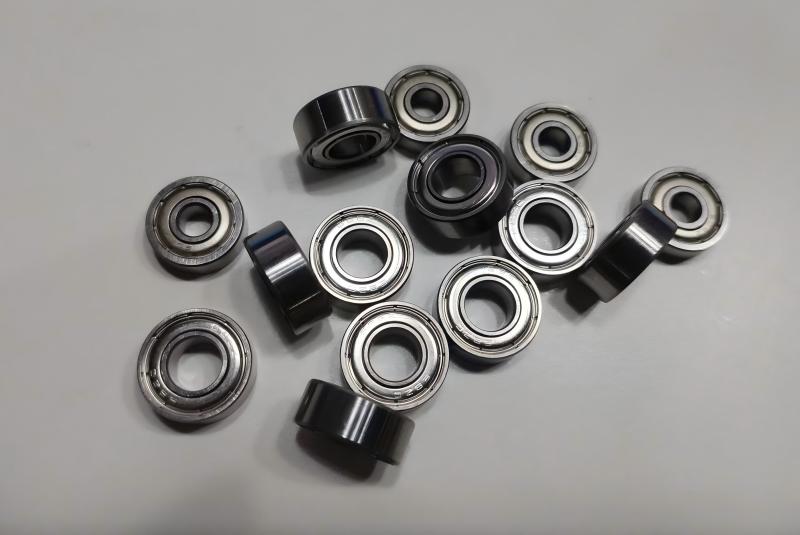
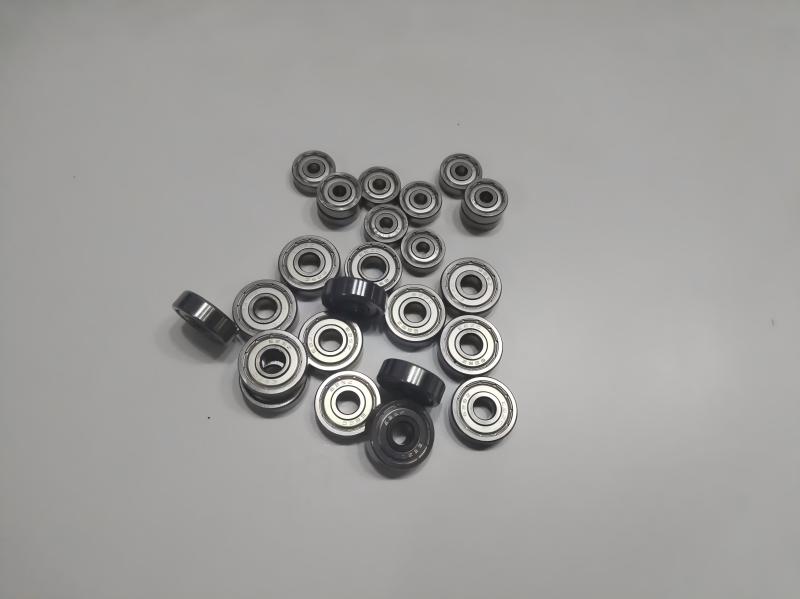
Deep groove ball bearings (DGBBs) appear across robot architecture — in revolute joints, actuator outputs, harmonic-drive inputs, wrist modules, end effectors and small linear axes. They are chosen for a combination of qualities:
Compactness and low weight, which matters when every gram counts at the end of an arm.
Low running friction, keeping actuators efficient and heat low.
High-speed capability, essential on the output side of small motors and gearboxes.
Simple mounting with standard shafts and housings, which keeps assembly costs down.
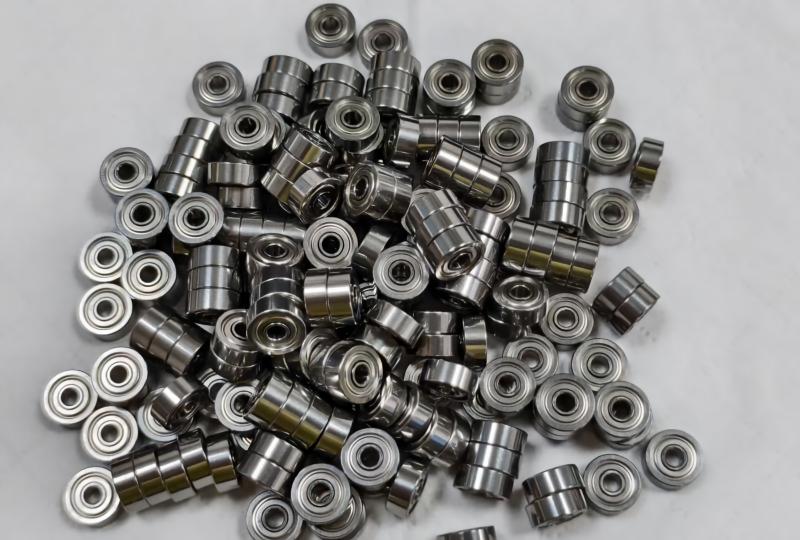
For many joints, especially smaller axes and wrist sections, a thin-section deep groove ball bearing (such as the 6800 and 6900 series) is the natural fit — it saves space and weight while still carrying the joint loads.
Key selection factors
Load: radial, axial and combined
Estimate the actual working loads, not just the static rating. Deep groove ball bearings handle radial loads well and moderate axial loads. In a robot joint, the combined radial + axial load is common, so check that the equivalent dynamic load stays comfortably below the bearing's rating — typically with a service factor of 2–3× for robotic applications.
Speed
Joints spin fast — sometimes tens of thousands of RPM on the output of small drives. Confirm the bearing's limiting speed covers your peak RPM with margin. High-speed joints favour low-friction, well-balanced bearings and the right lubrication.
Precision grade (accuracy)
This is where robotic joints differ from general machinery. For positioning accuracy and smooth motion, use higher precision classes:
Standard (ABEC 1 / P0–P6) — general purpose.
Precision (ABEC 5 / P5) — good for many joints.
Higher precision (ABEC 7 / P4 or P2) — for wrist axes, vision-guided pick-and-place and high-precision applications where runout directly affects positioning.
Higher grades reduce radial runout and dimensional variation, which translates directly into smoother, more repeatable motion.
Noise and vibration
Audible noise and vibration matter in robots operating near people and in lab or medical settings. Look for low-noise (EMQ) and low-vibration (ZV) grades, and choose balanced balls and tighter internal clearance control.
Material
Chrome steel (GCr15 / SAE 52100) — the default; cost-effective with good fatigue life.
Stainless steel (440C) — where corrosion, wash-down or cleanliness matters.
Hybrid ceramic (ceramic balls + steel rings) — higher speed, lower friction, electrical insulation and longer life in demanding joints.
For clean-room or food-adjacent robot cells, material and seal choice can be as important as the bearing itself.
Thin-section design
Where space is tight, thin-section 68/69 series bearings reduce envelope size and weight with minimal loss of capacity. Many small robot joints use them specifically to keep the arm slender.
Lubrication and sealing
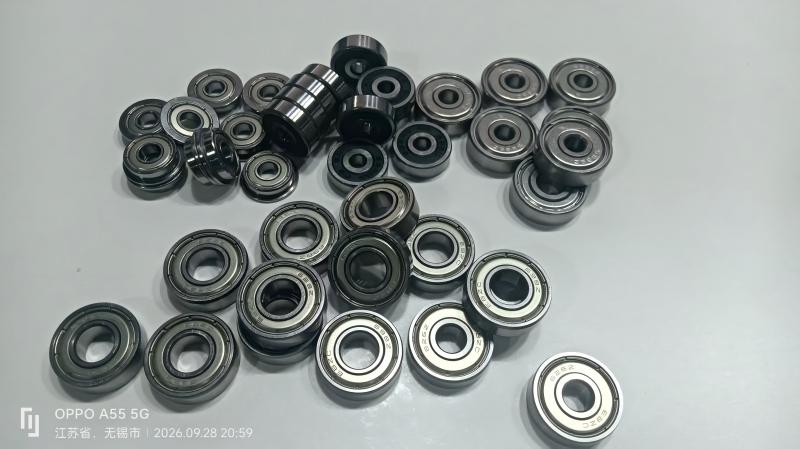
Seals: ZZ (metal shield) for low friction, or 2RS (rubber seal) for contamination protection.
Grease: choose a grease matched to speed, temperature and duty — many robot joints use a lifetime-lubricated, sealed bearing to avoid maintenance.
Preload and stiffness
Joint stiffness influences vibration and positioning. Depending on the design, a small axial preload can remove internal clearance and improve rigidity — specify preloaded pairs where the joint demands it.
Temperature and environment
Account for ambient temperature, heat from adjacent motors, and exposure to dust, solvents or washdown. These drive the material, seal and grease choices above.
Deep groove vs other joint bearing types
Deep groove ball bearings are not the only option. Use this as a quick comparison:
Bearing type | Best for | Trade-off |
Deep groove ball | Compact, high-speed, low-friction joints | Moderate axial load capacity |
Angular contact | Higher combined/axial loads, stiffness | Needs axial preload, more complex |
Crossed roller | High stiffness, high moment load, thin section | Higher cost |
Deep groove ball bearings win when the joint is compact, high-speed and cost-sensitive — a large share of small and mid-size robot joints.
Step-by-step selection checklist
Define the joint loads (radial, axial, combined) and a safety factor of 2–3×.
Confirm peak and continuous RPM against the bearing's limiting speed.
Choose a precision grade (P5/P4) matched to the required positioning accuracy.
Specify low-noise / low-vibration grade if the joint runs near people or in quiet environments.
Pick material (chrome, stainless, hybrid ceramic) based on speed, corrosion and cleanliness.
Prefer thin-section 68/69 series where space and weight are critical.
Select seals (ZZ/2RS) and lifetime grease matched to the environment.
Decide on preload for stiffness if the joint needs it.
Validate the fit (shaft/housing tolerances) and confirm the supplier can supply consistent, traceable precision.
Common mistakes to avoid
Over-speccing precision and paying for ABEC-7 where P5 is enough.
Under-estimating combined radial + axial loads, leading to premature failure.
Ignoring noise grade in joints that operate near humans.
Choosing standard grease for high-speed, high-heat joints.
Overlooking thin-section options and adding unnecessary weight and size.
The right supplier makes the difference
For precision, thin-section bearings used in robotic arm joints, consistency matters as much as the specification. Work with a supplier that can hold tight tolerances batch after batch, provide material and noise grades you specify, and ship traceable, verified parts.
If you are sourcing deep groove ball bearings for robotic arm joints and need help matching the right precision grade, thin-section series and materials to your design, get in touch — we will help you select the bearing that keeps your joint smooth, quiet and reliable for millions of cycles.