Industry News
Latest Bearing Industry News & Solutions


Latest Bearing Industry News & Solutions
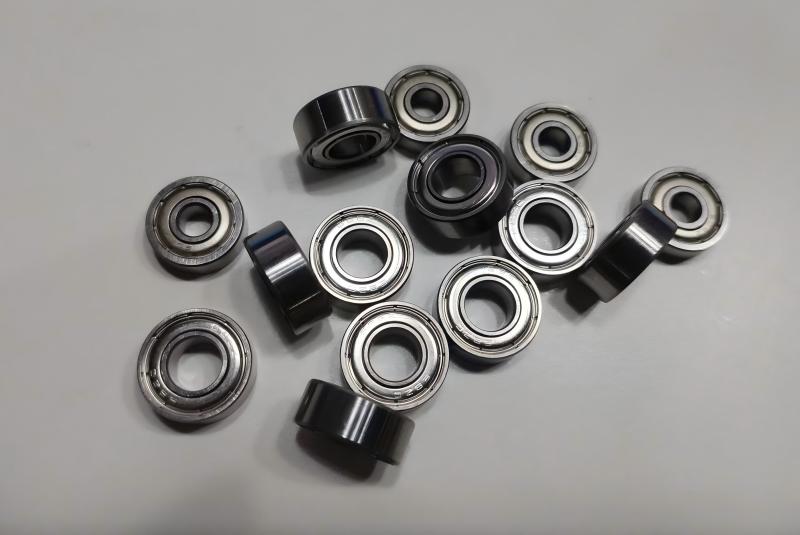
If you build toys, repair hobby motors, or upgrade RC cars and drones, the miniature ball bearing for toy motor is one of the most important decisions you will make. The right miniature bearing makes a motor quieter, longer-lasting, and more efficient; the wrong one causes noise, wobble, and premature failure. This guide explains why toy motors need miniature ball bearings, which sizes to choose, and how to avoid the most common mistakes.
Why Toy Motors Need Miniature Ball Bearings
Toy and hobby motors are small DC motors that spin fast — often between 10,000 and 50,000 RPM. At these speeds, the shaft needs smooth, low-friction support. That support comes from miniature ball bearings for toy motors: tiny deep groove ball bearings engineered for light loads, high speeds, and quiet running.
Three things make the miniature ball bearing the right choice over a plain bushing
Noise: a quality miniature bearing runs quietly and consistently; bushings get louder as they wear
Lifespan: toys are dropped, shaken, and run for hours — sealed miniature bearings survive far longer
Efficiency: less friction means more battery power becomes rotation, a real advantage in battery-powered toys
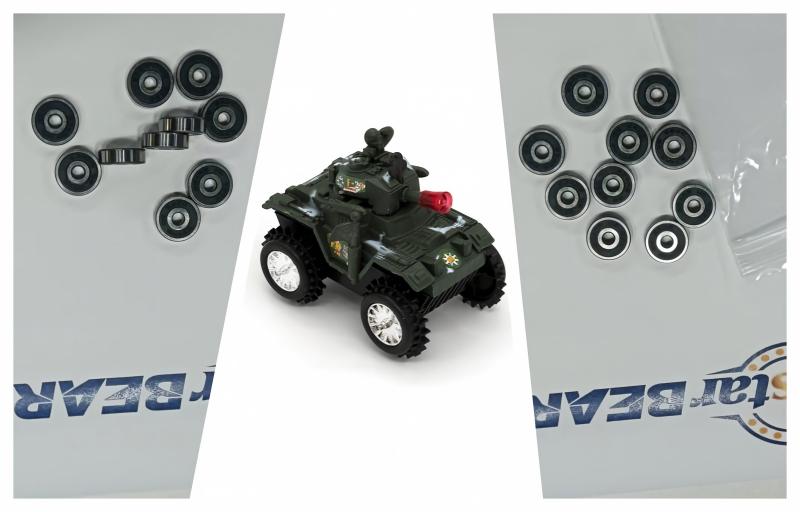
For hobbyists, replacing a stock bushing with a miniature ball bearing for toy motor applications is the single most cost-effective upgrade available.
Bushing vs Miniature Ball Bearing: What's the Difference?
Many low-cost toys ship with oil-impregnated bronze bushings. Here is the honest comparison:
| Bronze bushing | Miniature ball bearing | |
| Cost | Very low | Low (slightly higher) |
| Noise | Higher; wears louder | Quieter, more consistent |
| Lifespan | Short under load | Long, especially sealed |
| Max speed | Limited | High |
| Axial stability | Poor | Good |
| Best for | Disposable toys | Mid-to-high-end toys, hobbies, robotics |
The rule of thumb: if the toy must last longer than a few weeks of play, or if it runs fast (drones, RC cars, model boats), ball bearings for toy motors are worth the small extra cost.
The size you need depends entirely on the motor's shaft diameter. Below are the most common sizes in toys and hobbies:
| Bearing | Bore × OD × Width (mm) | Typical use |
| 623 | 3 × 10 × 4 | Miniature gear motors, small fans |
| 624 | 4 × 13 × 5 | Toy motors, small pumps |
| 634 | 4 × 16 × 5 | Toy DC motors, model motors, actuators |
| 625 | 5 × 16 × 5 | Small fan and pump motors |
| 686 | 6 × 13 × 5 | Drone and gimbal motors |
| 688 | 8 × 16 × 5 | Hobby motors, small pulleys |
| 608 | 8 × 22 × 7 | Skateboards, scooters, large hobby motors |
Always measure the shaft with a caliper before ordering — the printed number may be worn or misread.
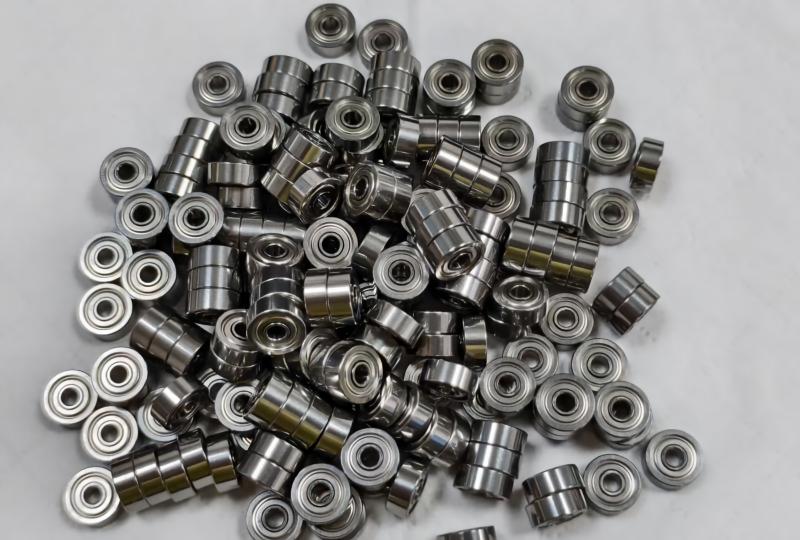
If you need several sizes to cover a full toy product range, buying from a supplier who stocks the complete miniature bearing range saves time and freight. Browse our miniature bearing range for the full list.
How to Choose the Right Miniature Ball Bearing for Your Toy Motor
ollow these four steps and you will rarely go wrong:
1. Measure the shaft diameter. This decides the bearing number. A 4 mm shaft needs a bearing with a 4 mm bore — such as a 624 or 634.
2. Check the housing space. The outer diameter must fit the motor housing. A 634 (16 mm OD) needs more room than a 624 (13 mm OD).
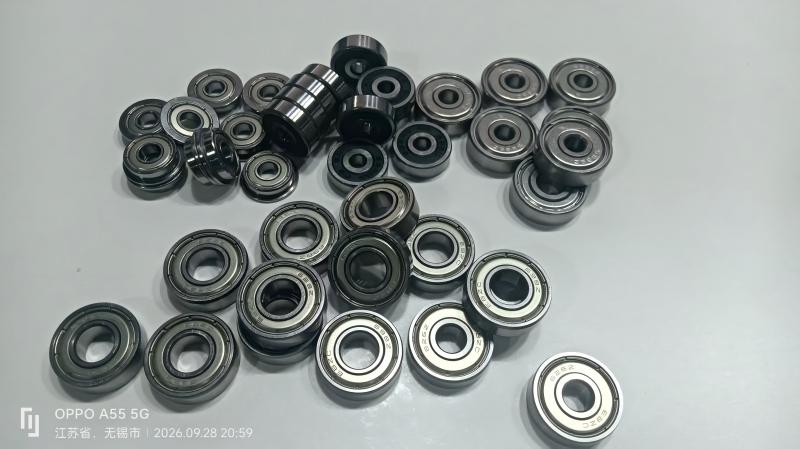
3. Decide on sealing.
2RS (rubber seals) — best for toys exposed to dust, carpets, and drops
ZZ (metal shields) — lower friction, for cleaner environments
4. Choose the right quality. Standard-grade bearings are fine for most toys. Precision grades (ABEC 5+) matter only for high-speed drones or instrument-grade motors.
Common Problems with Toy Motor Bearings — and Solutions
Problem: loud whining or grindingUsually caused by low-grade steel, poor lubrication, or dirt. Solution: switch to a sealed miniature ball bearing from a reputable supplier and check the shaft for straightness.
Problem: bearing seizes or jamsOften caused by over-tightening the housing or debris entry. Solution: use 2RS sealed bearings and assemble with the correct press fit — apply pressure to the outer ring only.
Problem: wobbly shaft (axial play)Typical of worn bushings or excessive clearance. Solution: replace the bushing with a miniature ball bearing, which holds the shaft far more tightly.
What size miniature ball bearing does a toy motor need?It depends on the shaft diameter. Common sizes are 623 (3 mm bore), 624 and 634 (4 mm bore), 686 (6 mm bore), and 608 (8 mm bore). Measure the shaft to be certain.
Can I replace a bushing with a miniature ball bearing?In most cases, yes — provided the outer diameter fits the housing. The upgrade reduces noise and extends life.
Sealed (2RS) or shielded (ZZ) — which is better for toys?For toys, 2RS sealed bearings are usually the better choice because they keep out dust, hair, and carpet fibres.
Are ceramic hybrid bearings worth it for toy motors?Rarely. Quality steel miniature bearings are sufficient; ceramic hybrid mainly helps in extreme high-speed RC and drone applications.
Do toy motor bearings need maintenance?Sealed bearings are pre-lubricated for life. If the motor is opened for service, avoid adding excess grease — it causes drag and noise.
Where to Buy Miniature Ball Bearings for Toy Motors
Jakstar Bearing is a professional bearing supplier based in the Wuxi bearing industrial zone, China. We supply the complete 60, 62, 63, 68 and 69 series, including the miniature sizes used in toys, hobbies, and robotics — 623, 624, 634, 625, 686, 688 and 608 — plus custom non-standard bearings made to your drawings.
For more on toy motor bearing basics, see our Toy Motor Bearings Guide.
Whether you need thousands of pieces for production or a handful for prototyping, we offer flexible quantities and fast worldwide delivery. Contact us with your size list today for a quotation within 24 hours.
🌐 www.jakstarbearing.com