Industry News
Latest Bearing Industry News & Solutions


Latest Bearing Industry News & Solutions
Miniature deep groove ball bearings are among the most versatile precision components in modern engineering. From surgical instruments and robotics to inline skate wheels and high-speed electric motors, these compact bearings carry rotating loads with remarkable smoothness and accuracy. If you are sourcing precision micro ball bearings for a new project — or simply trying to understand what makes the 6800 series so popular — this guide covers everything you need to know before you buyWhat Are Miniature Deep Groove Ball Bearings?
A miniature deep groove ball bearing is a radial ball bearing with an outside diameter typically no larger than 30 mm, and often much smaller. "Deep groove" refers to the geometry of the raceway: the grooves in both rings are deeper than those of other radial bearing types, which allows the bearing to handle both radial and moderate axial loads in both directions. This simple, robust design makes miniature deep groove ball bearings the default choice for compact rotating assemblies.Miniature bearings are manufactured from high-carbon chromium steel (such as GCr15 or AISI 52100), stainless steel (440C or 304), or hybrid ceramic variants for special applications. The balls are held in a cage — usually made of steel, brass, or polymer — that keeps them evenly spaced and reduces friction.
The word "miniature" is not just about size. It signals a different level of manufacturing discipline. When a bearing is only a few millimeters across, every micron of raceway geometry directly affects noise, vibration, and service life. That is why precision micro ball bearings are produced on dedicated grinding and super-finishing equipment, with tolerances measured in microns and run-out controlled to the highest standards.
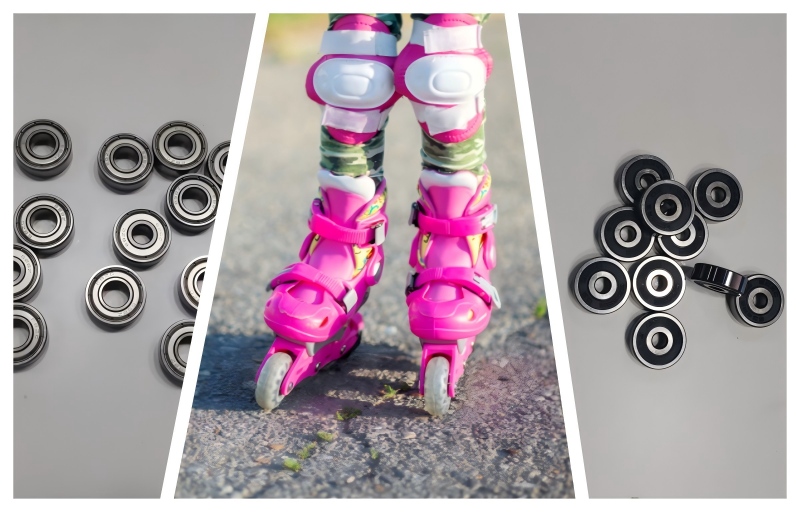
Take the 6800 bearing itself: bore 10 mm, outside diameter 19 mm, width 5 mm. It is extremely light, runs quietly, and is ideal for applications where space is limited but reliability cannot be compromised.
ZZ (metal shields): Thin steel shields on both sides keep large contaminants out while allowing very low friction. They are preferred for high-speed applications.
2RS (rubber seals): Contact or non-contact rubber seals provide better protection against dust and moisture, at the cost of slightly higher friction. They are ideal for dirty environments and applications with moderate speeds.
If you are unsure which one fits your application, a reliable supplier should ask about your operating environment and speed before recommending a configuration.
Compact electric motors and gearboxes
Potentiometers and rotary encoders
Miniature pumps and fans
Camera gimbal systems and optical instruments
Robotics joints where weight is critical
ABEC 1 / ABEC 3: Standard grades, suitable for general industrial use.
ABEC 5: Higher precision, common in instrumentation and hobby motors.
ABEC 7 / ABEC 9: Ultra-precision, used in aerospace, medical, and high-speed spindle applications.
For most commercial applications — including skateboard and inline skate wheels, home appliances, and small motors — ABEC 3 to ABEC 5 precision micro ball bearings offer an excellent balance of performance and cost.
Chrome steel (GCr15/52100): Best all-round performance and fatigue life; the standard choice.
Stainless steel (440C): Corrosion resistance for humid or wash-down environments.
Hybrid ceramic (Si₃N₄ balls, steel rings): Lighter, electrically insulating, and ideal for very high speeds.
Full ceramic: For extreme temperatures, chemical resistance, or non-magnetic requirements.
Matching the material to the environment is one of the most cost-effective decisions you can make when sourcing miniature bearings.
Medical devices: Dental handpieces, surgical tools, infusion pumps.
Robotics and automation: Joint actuators, encoders, and end-effectors.
Consumer electronics: Cooling fans, hard drives, and camera gimbals.
Sports and leisure: Inline skate wheels, skateboard wheels, and fishing reels — where bearing smoothness directly affects performance.
Automotive: Electric window motors, seat adjusters, and small pumps.
Aerospace and instrumentation: Gyroscopes, servo mechanisms, and sensors.
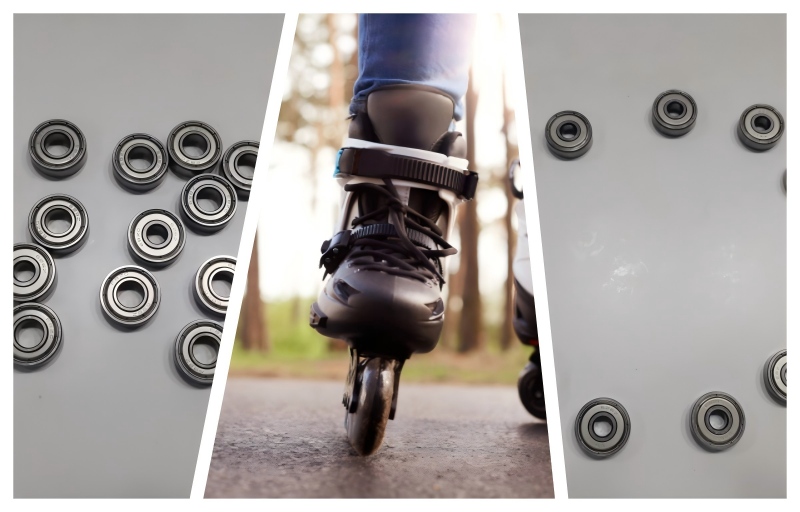
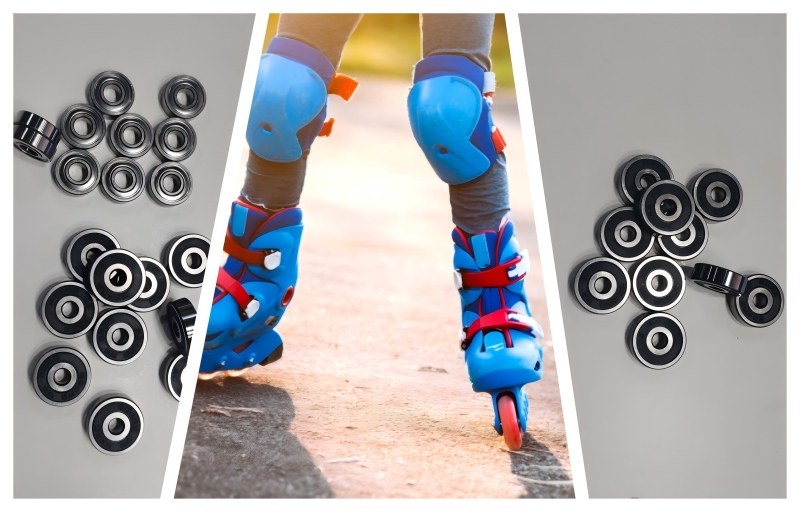
In the sporting goods sector, for example, the bearing in an inline skate wheel is subjected to high impact loads, dust, and moisture. A well-made miniature bearing with proper shielding or sealing can extend wheel life dramatically — which is exactly why skate brands specify precision micro ball bearings rather than generic hardware-store bearings.
What is the shaft diameter (bore) and housing space available? This determines the bearing series — for example, the 6800 series for thin designs, or 6200/6300 series for heavier loads.
What loads must the bearing carry — radial, axial, or combined? Deep groove bearings handle both, but each direction has limits.
What is the operating speed? Higher speeds favour metal shields (ZZ) and lower-friction cages.
What is the environment? Dust, moisture, chemicals, and temperature will steer you toward seals, stainless steel, or hybrid ceramics.
What precision grade do you really need? Specify the lowest grade that meets your function to keep cost under control.
What lubricant is required? Grease for most applications; oil for very high speeds; food-grade or low-outgassing options for special industries.
Controlled raceway grinding and super-finishing for low noise and consistent torque.
Batch inspection covering dimensions, radial run-out, and internal clearance.
Noise and vibration testing (andvibe testing) on finished bearings.
Clean assembly and proper lubrication — contamination during assembly is the #1 cause of premature bearing failure.
When you source from a supplier located inside a bearing industrial cluster — such as the Wuxi bearing industrial zone in China — you benefit from a complete local supply chain: raw steel, grinding, super-finishing, assembly, and testing are all close by. That proximity translates into shorter lead times, faster communication, and easier customisation.
Whether you are a design engineer specifying bearings for a new product, a procurement manager looking for a stable long-term supplier, or a distributor building a bearing range, we would be glad to work with you.
Bearing life depends on load, speed, lubrication, and contamination control. With correct selection and maintenance, most miniature bearings in light-load applications last well beyond the equipment they are installed in. We provide calculated L10 life data for your specific application on request.
Yes. Besides standard 60, 62, 63, 68, and 69 series, we manufacture custom and thin cross section miniature bearings according to customer drawings, including special materials, tolerances, and lubrication options.
Do you offer samples?