Industry News
Latest Bearing Industry News & Solutions


Latest Bearing Industry News & Solutions
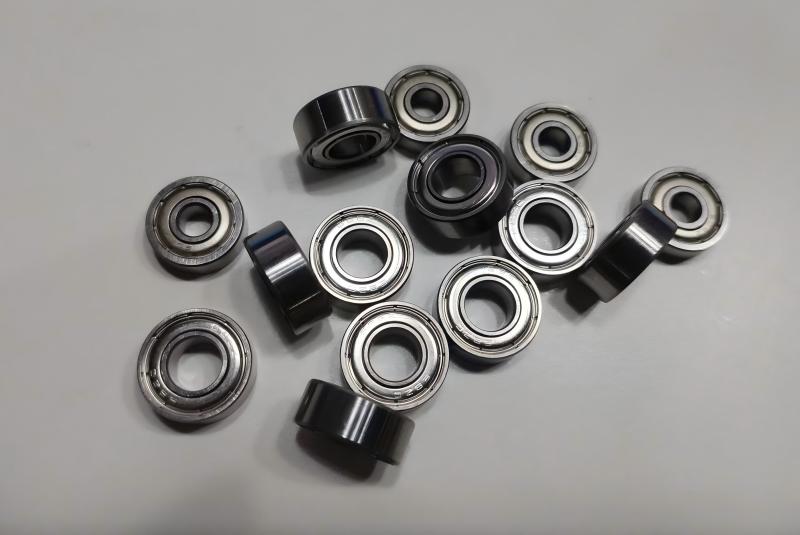
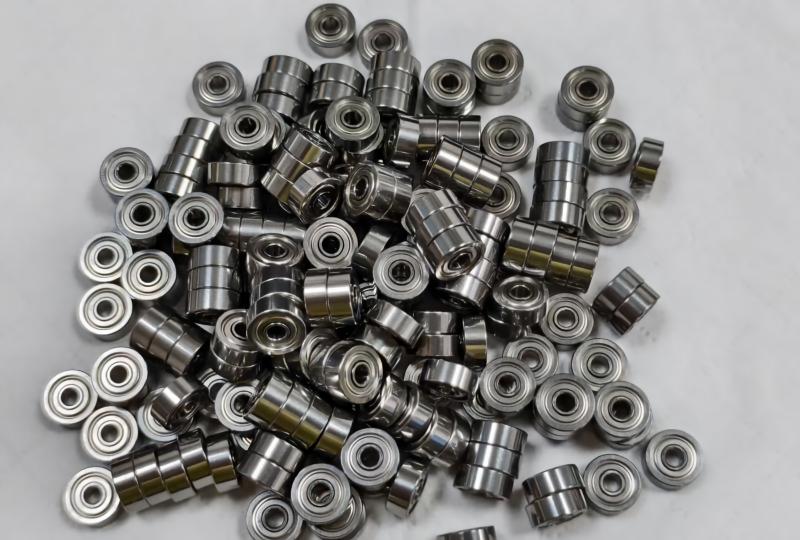
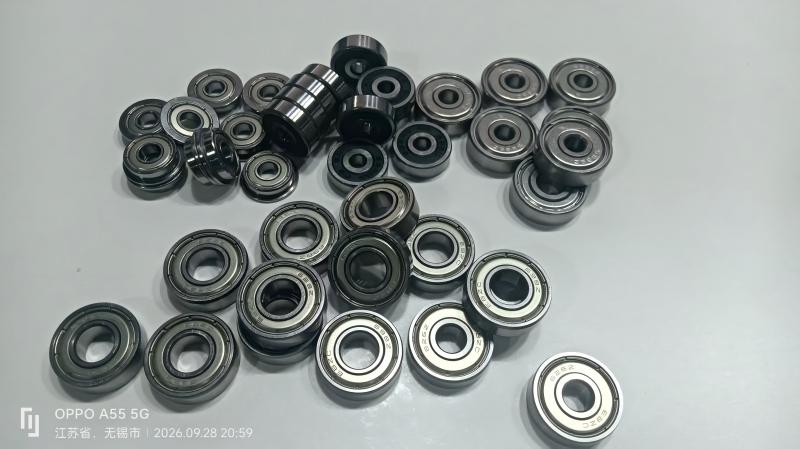
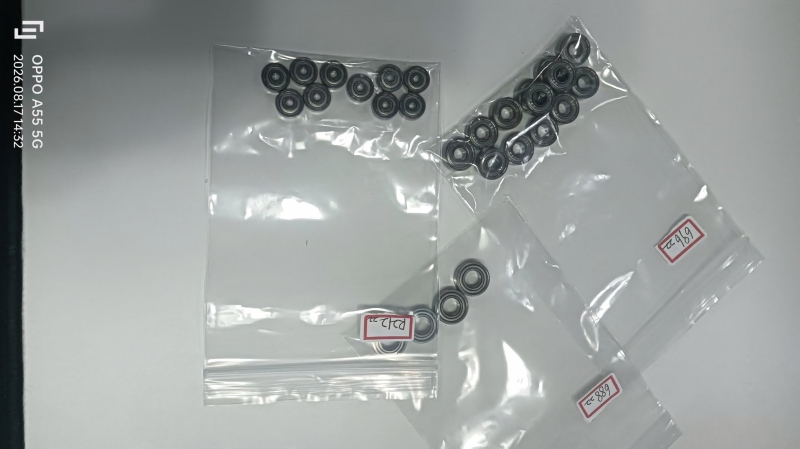
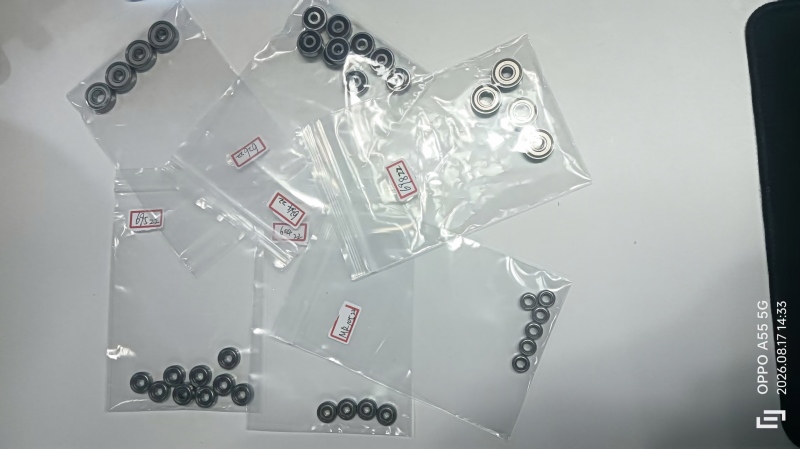
When people talk about industrial transmission components, large bearings for heavy machinery often come to mind first. Yet, a huge share of modern precision equipment relies on a category of nearly invisible components: miniature deep groove ball bearings. As displayed in the packaged samples in the photographs, models including 688ZZ, 622ZZ, 695ZZ, MR series and other micro specifications represent a vital subdivision of the bearing industry. Though compact in physical size, these micro bearings serve as the fundamental rotating support for countless high-tech, consumer and automated devices. This article elaborates on product characteristics, manufacturing standards, diversified application scenarios, market development trends, selection principles and value-added services covering bearing quality inspection services, bearing design consulting, custom manufacturing and stock supply solutions.
1. Basic Definition and Structural Advantages of Miniature Deep Groove Ball Bearings
Miniature bearings generally refer to ball bearings with inner diameter less than 10 mm. The terms precision miniature bearings and miniature precision bearings are widely used interchangeably by global purchasers, both describing micro rolling bearings manufactured to strict dimensional and rotational tolerance standards. In European markets, you may also encounter the local expression micro cuscinetti, which refers to the same category of micro rolling components. Most mainstream varieties adopt deep groove ball structures, the most mature and widely used bearing design worldwide. The deep arc raceway can bear radial loads as well as bidirectional axial loads simultaneously, bringing unique versatility that few other bearing structures can match.
Looking at the sorted samples in transparent packaging, every single bearing follows a standard composition: inner ring, outer ring, steel balls, retainer, and dust shields or rubber seals. Most samples in the pictures are equipped with metal ZZ dust shields. The shields block dust, debris and water mist from invading internal raceways, extending service life under normal working environments. For humid or heavily polluted operating conditions, manufacturers can upgrade to 2RS rubber contact seals to achieve superior sealing performance.
Compared with other bearing types, miniature deep groove ball bearings have three prominent strengths. First, low friction torque. Superfinishing processing eliminates tiny surface defects on raceways, so the bearings rotate smoothly with minimal power loss, an essential feature for battery-powered miniature equipment. Second, excellent high-speed adaptability. Many specifications can steadily operate at rotational speeds exceeding tens of thousands of revolutions per minute, meeting requirements of micro high-speed motors. Third, high standardization. Products are manufactured strictly following ISO metric dimension standards. Specifications like 688, 622, 695, MR105 can be universally interchanged between qualified suppliers, lowering design and after-sales maintenance costs for equipment manufacturers.
Material selection is another decisive factor of product quality. Standard miniature bearings are usually forged from GCr15 chrome bearing steel. After precise heat treatment, the material reaches hardness of HRC 60–64, offering outstanding wear resistance and contact fatigue resistance. For special working environments such as medical instruments, aquatic equipment and chemical testing devices, suppliers can provide stainless steel miniature bearings to resist rust and chemical corrosion, though bearing capacity will decrease slightly compared with chrome steel versions.
2. Product Classification and Specification Introduction
As shown in the labeled packaged goods, miniature bearings can be divided into multiple series according to dimension systems and structural differences.
67/68/69 Thin-wall Series
Representative model 688ZZ, frequently seen in the photos, belongs to this category. The thin-wall design features slim outer and inner ring walls, aiming to save installation space for ultra-compact structures. This series is widely used when designers face strict limits on overall equipment volume.
60/62 Metric Standard Miniature Series
Models such as 622ZZ and 695ZZ fall into this group. They adopt relatively conventional wall thickness, balancing load capacity and volume constraints. It is the most universal choice for miniature motors, small transmission mechanisms and intelligent consumer hardware.
MR Micro Series
The MR series stands for micro-miniature bearings, covering ultra-small sizes like MR105. These bearings have minimal cross-sectional height, developed for micro devices with extremely limited installation space, including precision optical instruments and miniature sensor rotating assemblies.
Flanged Miniature Bearings (MF Series)
While not fully displayed in this batch of samples, flanged bearings are an important derivative. An integrated flange on the outer ring simplifies axial positioning during assembly, removing the need for extra retaining rings. They are favored by manufacturers of small gearboxes and 3D printer moving parts.
Beyond standard catalogue bearings, two custom manufacturing lines attract continuous global inquiries: custom designed bearings and customized non-standard bearings. When standard bearing dimensions cannot satisfy unique assembly space, load conditions or special lubrication requirements, engineers deliver tailored solutions via professional bearing design consulting. Customers can adjust internal clearance, sealing forms, material grades and surface coatings to match exclusive equipment operating parameters.
For customers focusing on medium and large-size rolling bearing procurement, we also operate as a reliable cylindrical roller bearing stockist, maintaining sufficient spot inventory of standard cylindrical roller models to support short lead-time orders for automation and machinery clients.
All specifications undergo strict sorting and inspection before packaging. As demonstrated in the images, finished bearings are classified by model and packed into independent transparent polybags with clear labels. Separate packaging avoids scratches caused by mutual collision during transit. Comprehensive bearing quality inspection services cover dimensional tolerance, rotational smoothness, noise level, internal clearance and appearance flaws. Unqualified items are eliminated to guarantee consistent quality for end customers.
3. Wide Application Fields of Miniature Bearings
The market demand for miniature bearings continues to expand, driven by the global trend of equipment miniaturization, lightweight and intelligence. The main downstream application sectors are summarized below.
3.1 Consumer Electronics and Intelligent Hardware
This is the largest consumption market for micro bearings. Cooling fans inside laptops, handheld electric fans, miniature vibration motors, smart wearable rotating components and camera lens focusing structures all rely on miniature bearings. For consumer products, low noise and stable long-term operation become core indicators. Poor-quality bearings will generate obvious abnormal noise after short running time and damage user experience.
3.2 RC Hobby, Model Equipment and Toy Industry
Models, remote-controlled drones, racing cars, miniature ship models and high-end skateboard wheels use massive quantities of 688, R188 and MR-series bearings. Hobby users pursue ultra-smooth rotation and low rolling resistance. Many merchants supply high-precision, pre-lubricated bearings optimized for high-speed model operation.
3.3 Medical Instruments
Medical equipment sets strict standards for bearing precision, cleanliness and biocompatibility. The demand for high precision medical device bearing keeps rising year after year. Miniature bearings are installed in dental high-speed handpieces, surgical power tools, medical infusion pumps and optical diagnostic instruments. In many medical scenarios, stainless steel bearings are required to withstand repeated high-temperature disinfection without rusting. Any bearing failure may directly affect the safety of clinical operations, so reliability requirements reach the highest level.
3.4 Automation Equipment and Robotics
Small servo motors, miniature planetary gearboxes, robot joint micro actuators and conveyor small rollers all adopt miniature deep groove ball bearings. As industrial lightweight robots and collaborative robots develop rapidly, the demand for compact, lightweight transmission components rises year by year. Precision-grade miniature bearings effectively guarantee positioning accuracy of robotic moving parts.
3.5 Optical Instruments and Testing Equipment
Precision optical cameras, optical focusing frames, meteorological measuring sensors and laboratory testing instruments need rotation support with minimal runout error. Super-precision miniature bearings reduce rotation vibration, preventing image distortion and measuring deviation.
3.6 Power Tools and Small Household Appliances
Handheld mini power drills, electric manicure machines, blenders and vacuum cleaner micro motors are typical application scenarios. These devices often bear fluctuating loads and require bearings with strong anti-fatigue performance.
4. Core Standards, Precision Grades and Product Selection Guidelines
Buyers often feel confused when selecting miniature bearings, as precision grades directly decide applicable scenarios. According to ABEC and ISO standards, mainstream precision grades include ABEC-1(P0), ABEC-3(P6), ABEC-5(P5) and higher grades.
ABEC-1(P0): General purpose, suitable for ordinary toys, low-speed small household appliances, cost-sensitive mass production.
ABEC-3(P6): Widely adopted standard precision, matching most micro motors, model equipment and general automation components, balancing performance and cost.
ABEC-5(P5): High-precision version, used for optical equipment, medical devices and precision testing instruments requiring low vibration and low runout.
Besides precision grade, purchasers must confirm multiple parameters before ordering:
Dimension parameters: inner diameter × outer diameter × width, to avoid assembly mismatch.
Seal type: ZZ metal shield or 2RS rubber seal.
Material: Chrome steel or stainless steel.
Internal clearance: Normal clearance (CN), C3 enlarged clearance for high-temperature and high-speed working conditions.
Lubrication grease type: Low-temperature grease, high-temperature grease or food-grade grease for special industries.
Working environment cannot be ignored. If equipment operates in dust-laden, humid or temperature-varying surroundings, customers need to upgrade sealing structure and material correspondingly. Improper selection leads to premature rust, abnormal noise, stuck rotation and early bearing failure. When customers struggle with model selection and parameter confirmation, professional bearing design consulting helps avoid costly selection mistakes in the early project phase.
5. Industry Challenges and Future Development Trend
Against the backdrop of global manufacturing transformation, the miniature bearing industry faces both opportunities and challenges.
On the opportunity side, the vigorous growth of new energy vehicles, service robots, wearable electronics and medical equipment continuously generates new demand for micro transmission components. Many mechanical products are developing toward smaller size and higher integration, pushing miniature bearings to expand market share continuously. Meanwhile, Chinese bearing manufacturers are upgrading production technology. More factories introduce fully automatic grinding machines, superfinishing equipment and automatic online detection systems, narrowing the performance gap with well-known international brands and forming obvious cost advantages. Purchasers can access one-stop resources covering standard stock bearings, custom designed bearings, customized non-standard bearings, and systematic bearing quality inspection services.
However, the industry also faces prominent challenges. Low-end market suffers from fierce price competition. Some manufacturers cut production standards by reducing heat treatment time, lowering steel raw material quality and simplifying surface processing. Cheap inferior bearings have short service life, easily triggering quality complaints for terminal manufacturers. At the high-end market, ultra-precision miniature bearings for aerospace, top-tier medical equipment still partially rely on imported products, and domestic suppliers need further breakthroughs in ultra-fine processing technology and consistency control.
Looking ahead, three development directions will dominate the miniature bearing sector.
First, higher precision and higher consistency. Intelligent manufacturing equipment will realize full-process automatic monitoring, minimizing the difference between individual bearings within one batch.
Second, customized diversified solutions. Apart from standard metric bearings, manufacturers will provide custom designed bearings and customized non-standard bearings, matched with professional bearing design consulting to satisfy differentiated requirements of segmented industries including medical, robotics and optical equipment.
Third, environmentally friendly and long-life designs. Low-friction special grease, wear-resistant surface treatment technology will be popularized to extend bearing service cycles and reduce energy consumption of rotating systems.
6. Conclusion
Miniature deep groove ball bearings are inconspicuous tiny components, yet they constitute the foundation of modern precision machinery. Every packaged bearing displayed in the photos embodies the combination of material technology, precision machining and strict bearing quality inspection services. From consumer electronics we use every day, to cutting-edge medical devices demanding high precision medical device bearing, intelligent robots and optical testing instruments, countless smooth rotational movements are supported by these precision miniature bearings / miniature precision bearings.
As manufacturing miniaturization advances continuously, the market value of miniature bearings will keep rising. Professional suppliers can deliver comprehensive support: spot supply as a cylindrical roller bearing stockist, technical bearing design consulting, development of custom designed bearings and customized non-standard bearings, alongside full set inspection services. For bearing suppliers, persistent investment in process improvement and quality stability is the path to long-term competitiveness. For equipment designers and purchasers, scientific specification selection, clear definition of working condition requirements and cooperation with standardized manufacturers are critical to guarantee stable operation of end products. In the era of intelligent manufacturing, these small bearings will continue to deliver steady power for precision motion worldwide.