Industry News
Latest Bearing Industry News & Solutions


Latest Bearing Industry News & Solutions
Introduction to Miniature Precision Bearings
Miniature precision ball bearings are one of the most critical mechanical components in modern high‑tech manufacturing. These small‑dimension bearings deliver low friction, high rotational accuracy, stable operation and long service life, supporting countless compact mechanical systems across industries. Among all miniature bearing families, the 60 series miniature bearings stand out as the most widely adopted standard product for light‑load, high‑speed rotating scenarios.
As global demand for miniaturized equipment keeps rising, more manufacturers are looking for reliable suppliers of standard miniature bearings as well as tailor‑made non‑standard bearing parts. Many engineers and purchasing managers face real‑world challenges: finding consistent quality miniature bearings, selecting correct model numbers, solving custom‑drawing bearing requirements, and sourcing suppliers with full import‑export qualifications.
This article will give you a complete overview of 60‑series miniature precision bearings, their core features, typical industry applications, key selection criteria, and professional custom non‑standard bearing services. We will also share practical advice for buyers who need both off‑the‑shelf standard bearings and bespoke bearing components from technical drawings.
What Are 60 Series Miniature Precision Bearings?
The 60 series belongs to the deep‑groove ball bearing category, designed for miniature and small‑size mechanical assemblies. Compared with other miniature bearing series such as 62, 63, 68 and 69 series, 60‑series bearings feature moderate inner‑outer ring dimensions, balanced load‑bearing capacity and compact structure.
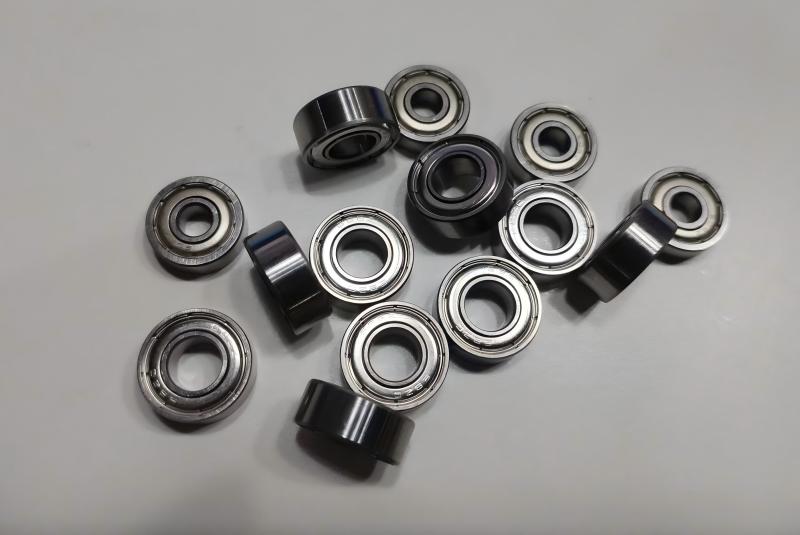
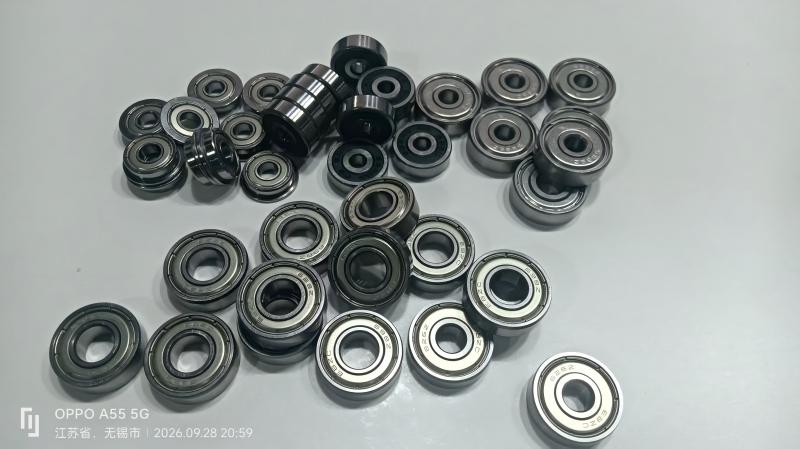
These bearings are commonly manufactured from high‑quality bearing steel GCr15. After precise heat treatment, grinding and finishing processes, they achieve high hardness, good wear resistance and stable dimensional performance. Standard 60 series miniature bearings are available with different sealing options: open type, 2RS rubber seals, ZZ metal shields. Sealed versions are widely used to prevent dust, moisture and foreign particles from entering the bearing interior, extending working life in harsh working environments.
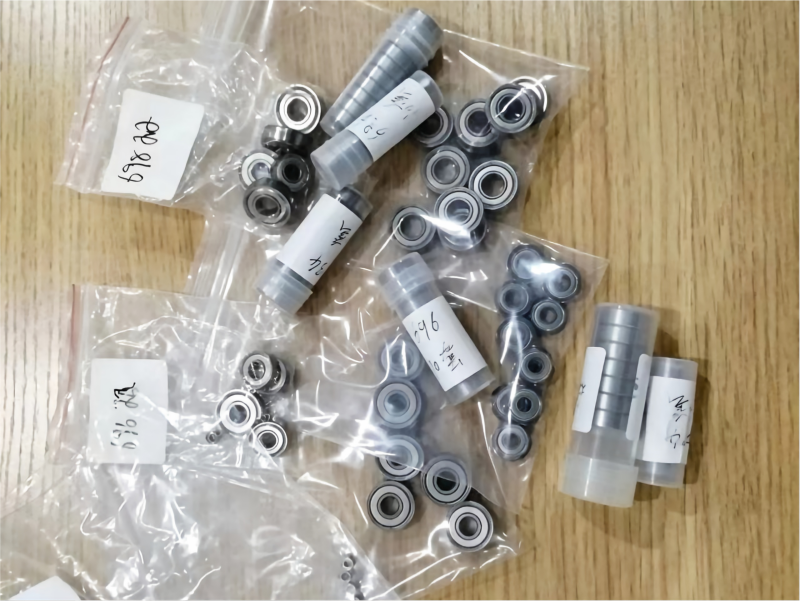
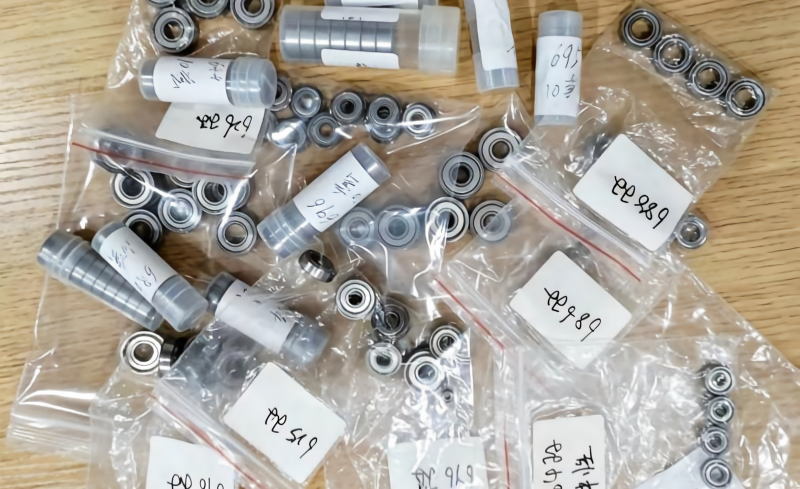
From our physical sample collection, we can observe the real‑world appearance of 60‑series miniature bearings. Each bearing is packed in individual anti‑rust plastic bags, which is the standard export‑ready packaging for miniature bearings. Every bag is marked with corresponding model numbers for easy sorting, inventory management and sample testing. These samples cover multiple sizes within the 60‑series range, as well as other complementary miniature bearing models for diversified customer requirements.
Insert your product image here: Photo of packaged miniature 60‑series bearing samples.
Core Performance Characteristics of 60 Series Miniature Bearings
1. High rotational precision
Precision grinding processing guarantees low run‑out, smooth rotation and low noise. This property makes 60‑series miniature bearings suitable for high‑speed rotating equipment.
2. Low friction and energy‑saving performance
Well‑optimized internal clearance and surface finish reduce friction torque. The equipment consumes less power while running at high speed.
3. Good dimensional stability
Proper heat treatment eliminates internal stress. Dimension will not drift dramatically under normal operating temperature.
4. Wide compatibility
Standard dimension conforms to ISO international standards. 60‑series miniature bearings can be directly assembled into most standard‑designed machinery without modification.
5. Optional sealing configurations
Open bearings for clean environments; ZZ metal shields for dust‑proof; 2RS rubber seals for environments with water vapor or dust. Buyers can choose according to working conditions.
Industry Applications of 60 Series Miniature Precision Bearings
The 60‑series miniature bearings are widely applied in multiple high‑end industries. Many small‑size devices rely on these bearings to realize stable rotation.
Small‑size Electric Motors
Miniature motors are everywhere: household small appliances, power tools, micro‑servo motors, fan motors. 60‑series miniature bearings support rotor rotation, reduce vibration and noise. For motor manufacturers, consistent bearing quality directly determines motor service life.
Automation & Robotics
Small automated equipment, miniature robotic joints, conveyor small rollers, sorting machinery. Compact mechanical structures require small‑size bearings with high precision. 60‑series bearings can satisfy light‑to‑medium radial load requirements in automation systems.
Medical Equipment & Precision Instruments
Medical devices, lab analytical instruments, optical equipment. These fields have strict requirements for low noise, high cleanliness and long‑term stable operation. Precision miniature bearings must pass strict dimensional inspection before delivery.
Consumer Electronics & Hobby Equipment
3C peripheral equipment, model machinery, drone components, small gearboxes. These applications require cost‑effective miniature bearings with stable performance.
Industrial Transmission Parts
Small gearboxes, small pulleys, miniature transmission assemblies. Standard 60‑series bearings serve as key rotating parts for light‑load transmission systems.
How to Select Correct 60 Series Miniature Bearings for Your Project
Many purchasing officers make mistakes in bearing selection. Wrong model selection will lead to premature failure, excessive noise or equipment damage. Below are key factors you need to consider before placing orders.
1. Determine Bearing Size and Model Number
The 60‑series model number defines inner diameter, outer diameter and width. You must confirm shaft size, housing bore dimension and installation space. If you have existing equipment drawings, double‑check dimension parameters.
2. Working Load: Radial Load & Axial Load
60‑series deep‑groove ball bearings mainly bear radial load. They can also withstand moderate axial load. If your application has heavy axial force, you may need to consider alternative bearing types.
3. Operating Speed
Check maximum rotating speed of your machine. Miniature bearings have their limit speed. Excessive speed will cause overheating and shorten bearing life.
Working Environment
Dust, humidity, temperature, chemical corrosion.
‑ Clean dry environment: open‑type bearing
‑ Dust‑prone workshop: ZZ metal shield
‑ Humid or splash‑water environment: 2RS rubber sealed bearing
5. Required Precision Grade
Standard miniature bearings come with different precision classes. For general machinery, normal precision is sufficient. For high‑speed precision instruments, you need higher‑precision grade bearings with strict tolerance requirements.
6. Material and Heat‑treatment Requirement
Most standard miniature bearings adopt GCr15 bearing steel. After quenching and tempering, hardness reaches 59‑62 HRC. For special corrosive environments, stainless steel miniature bearings are available as an alternative.
Custom Non‑Standard Precision Bearing Solutions for Special Requirements
Besides standard 60‑series miniature bearings, many customers cannot find off‑the‑shelf bearings matching their special mechanical design. This is where custom non‑standard bearing service becomes essential.
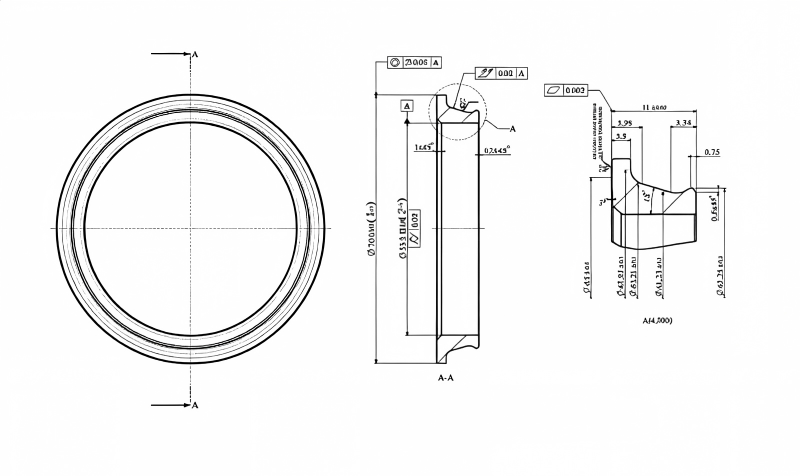
Many engineering projects require bearing rings with special contour, special chamfer, unique groove shape, special tolerance, non‑standard dimension. These parts cannot be bought from regular stock. They need to be manufactured according to customer technical drawings.
Our service covers full‑process custom bearing manufacturing: from drawing review, technical feasibility evaluation, sample making, dimensional testing to mass‑production. We accept customer‑provided 2D technical drawings. Our technical team will check all dimensional tolerances, geometric tolerances, surface roughness, heat‑treatment requirements, chamfer requirements, hardness specifications.
What kind of custom bearing projects can we handle?
1. Non‑standard dimension bearing rings, special inner/outer ring geometry
2. Special contour rolling grooves, special angle features
3. Strict geometric tolerance requirements: roundness, coaxiality, flatness
4. Special heat‑treatment requirements such as vacuum quenching
5. Custom surface roughness, sharp‑edge chamfer specifications
6. Custom‑size miniature bearings for special equipment
Important note: For custom‑made bearing components, sample verification is always recommended before mass‑production. Customers can send technical drawings, our team will evaluate technical difficulty, provide sample quotation, sample lead‑time, and confirm all technical specifications.
For buyers, custom bearing projects require clear communication. You need to provide complete drawing information: all dimensions, tolerances, hardness, surface finish, material, heat‑treatment rules. Missing technical parameters will cause misunderstanding and wrong production.
What to Look for When Choosing a Miniature Bearing Supplier
For international buyers, selecting a reliable bearing supplier is critical. Especially for single‑source small‑batch orders and custom‑drawing projects.
1. Complete Import & Export Qualification
When you import miniature bearings from China, your supplier should have complete import‑export qualification. This ensures smooth customs clearance, proper commercial documents, proforma invoice, commercial invoice, packing list.
2. Ability to Supply both Standard Stock Bearings and Custom‑Drawing Parts
A good supplier can handle two business lines: ready‑made 60‑series miniature bearings and custom non‑standard bearing parts. This is convenient for customers who need both standard items and bespoke components.
3. Sample support
For new projects, sample testing is mandatory. The supplier should support sample production, sample delivery, and clear sample cost policy. In many cases sample fees can be offset against future bulk orders.
4. Quality inspection capability
Each batch of bearings should go through inspection: dimension check, hardness test, appearance inspection, rotational test. For high‑precision custom bearings, CMM coordinate measuring report can be provided.
5. Clear lead‑time for samples and bulk orders
Standard miniature bearings have short delivery time. Custom non‑standard bearings require longer lead‑time for tooling and grinding wheel preparation. Buyers need to know sample lead‑time and mass‑production lead‑time in advance.
6. Professional technical communication
When customers send technical drawings, supplier should give timely feedback on technical feasibility, possible difficulties, and reasonable suggestions for drawing optimization.
Common Challenges for Buyers of Miniature Precision Bearings
We summarize several frequent pain‑points encountered by overseas purchasers.
First, many buyers struggle with poor‑quality miniature bearings. Low‑cost bearings with loose dimensional tolerance will bring noise, vibration and early failure to your equipment. It is not wise to only pursue low price. Quality and consistency are far more important.
Second, for custom non‑standard bearings: some suppliers cannot fulfill strict geometric tolerance requirements. For example, strict coaxiality, flatness, roundness. Custom bearing manufacturing requires precision grinding equipment and experienced technical workers.
Third, communication barriers. When sending technical drawings, incomplete information leads to misunderstanding. It is best to provide full 2D drawings with all tolerances, material and heat‑treatment requirements.
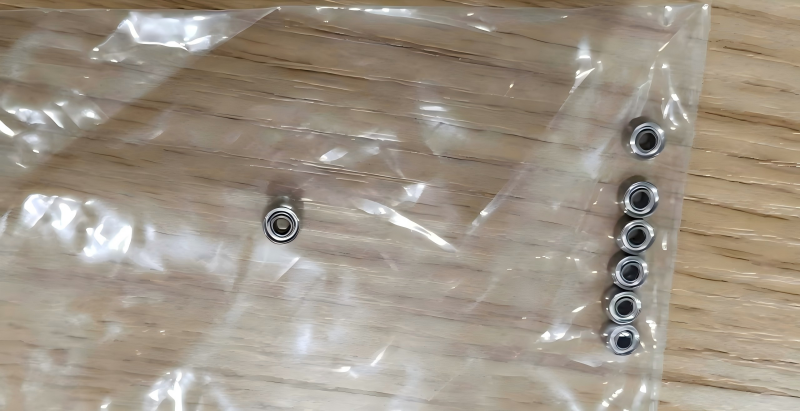
Fourth, sample management. Small‑size miniature bearings are easy to lose or mix‑up. Proper anti‑rust packaging and clear model marking are very important. As shown in our sample photos, each bearing batch is packed in anti‑rust plastic bags with model labels for easy identification.
Conclusion
Miniature precision bearings, especially the widely‑used 60‑series miniature bearings, are fundamental components for modern compact machinery. Whether you are purchasing standard off‑the‑shelf bearings for mass‑production equipment, or you need custom non‑standard bearing parts according to your engineering drawings, you need to select a qualified supplier.
When selecting 60‑series miniature bearings, you should evaluate size, load condition, working environment, sealing type, precision grade and material requirement. For custom‑made bearings, detailed technical drawings are essential. Sample verification is highly recommended before bulk‑order placement.
Reliable suppliers should offer complete import‑export documents, sample support, quality inspection, and professional technical evaluation for custom drawing projects.
If you have requirements for 60‑series miniature precision bearings or custom non‑standard bearing components, you can share your specifications or technical drawings. We will evaluate technical feasibility and provide you with competitive quotation and lead‑time information.