Industry News
Latest Bearing Industry News & Solutions


Latest Bearing Industry News & Solutions
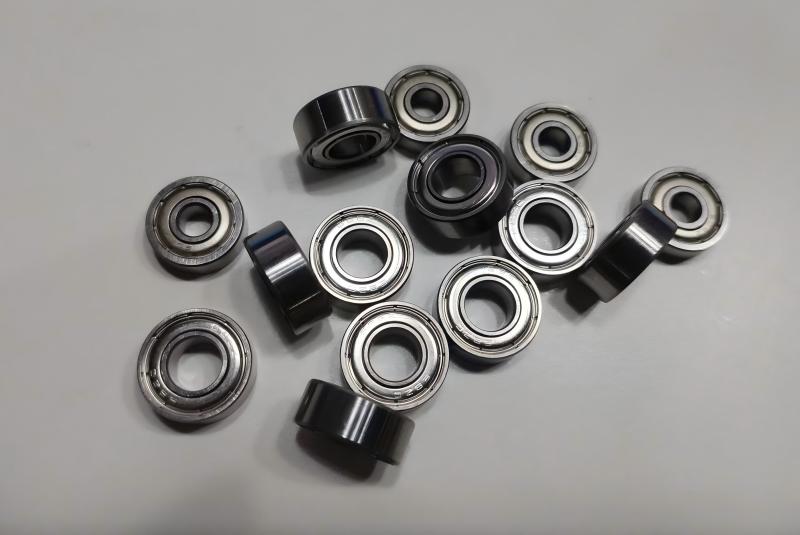
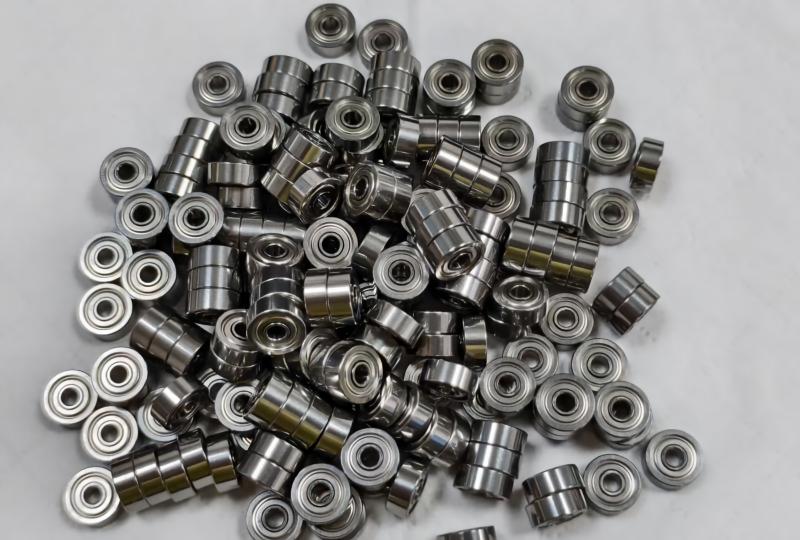
In the world of motion and machinery, size does not always equal importance. Precision miniature bearings — often measuring just a few millimeters in bore diameter — are the unsung heroes behind countless devices that define modern life. From dental handpieces spinning at hundreds of thousands of RPM to servo motors driving industrial automation, these tiny components deliver outsized performance.
At Jakstar Bearing, we specialize in the design and manufacture of precision miniature bearings, including the widely used 60 series deep groove ball bearings, as well as custom non-standard solutions tailored to demanding applications. This guide covers everything you need to know about miniature bearing types, key specifications, application fields, and how to select the right bearing for your project.
What Are Precision Miniature Bearings?
Miniature bearings are a category of rolling-element bearings typically defined by a bore diameter of 10 mm or less (some standards extend to 12 mm). Within this category, precision miniature bearings are manufactured to tighter dimensional tolerances, lower runout, and higher rotational accuracy than commodity-grade small bearings.
The most common configuration is the deep groove ball bearing, which features:
A solid outer ring and inner ring
A single row of precision-grade steel balls
A cage (typically steel, polyamide, or brass) that maintains ball spacing
Optional seals (2RS) or shields (ZZ) for contamination protection
The 60 series (e.g., 603, 604, 605, 606, 607, 608, 609, 6000) is one of the most widely used miniature bearing series, offering an excellent balance of load capacity, speed capability, and compact dimensions.
Precision Miniature Bearings: The Complete Guide to Selection, Applications & Quality
Introduction
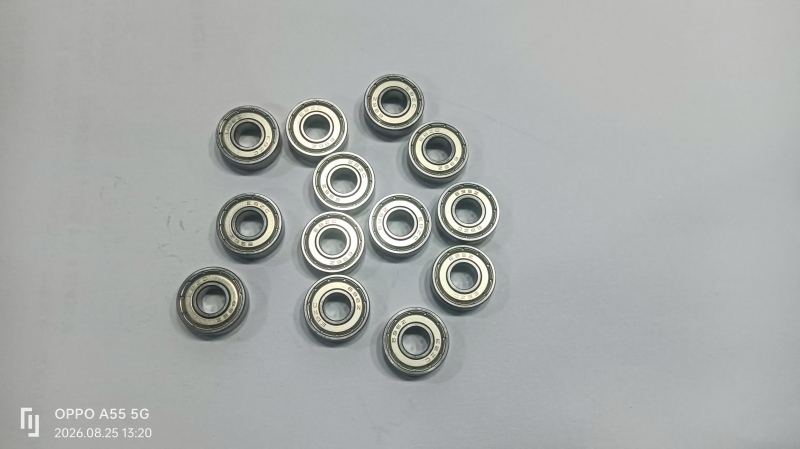
In the world of motion and machinery, size does not always equal importance. Precision miniature bearings — often measuring just a few millimeters in bore diameter — are the unsung heroes behind countless devices that define modern life. From dental handpieces spinning at hundreds of thousands of RPM to servo motors driving industrial automation, these tiny components deliver outsized performance.
At Jakstar Bearing, we specialize in the design and manufacture of precision miniature bearings, including the widely used 60 series deep groove ball bearings, as well as custom non-standard solutions tailored to demanding applications. This guide covers everything you need to know about miniature bearing types, key specifications, application fields, and how to select the right bearing for your project.
What Are Precision Miniature Bearings?
Miniature bearings are a category of rolling-element bearings typically defined by a bore diameter of 10 mm or less (some standards extend to 12 mm). Within this category, precision miniature bearings are manufactured to tighter dimensional tolerances, lower runout, and higher rotational accuracy than commodity-grade small bearings.
The most common configuration is the deep groove ball bearing, which features:
A solid outer ring and inner ring
A single row of precision-grade steel balls
A cage (typically steel, polyamide, or brass) that maintains ball spacing
Optional seals (2RS) or shields (ZZ) for contamination protection
The 60 series (e.g., 603, 604, 605, 606, 607, 608, 609, 6000) is one of the most widely used miniature bearing series, offering an excellent balance of load capacity, speed capability, and compact dimensions.
Main Types & Configurations
1. Deep Groove Ball Bearings (60 Series)
The workhorse of the miniature bearing world. Deep groove bearings can support both radial and moderate axial (thrust) loads in either direction. They are suitable for high-speed and ultra-high-speed applications.
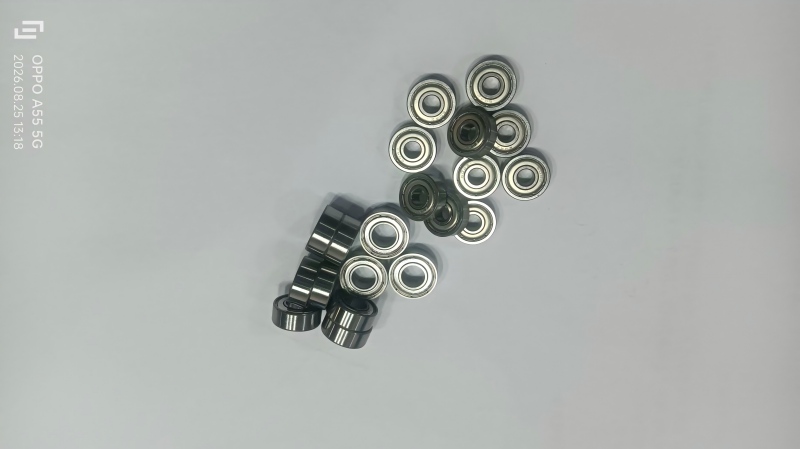
Common 60 series sizes:
| Bearing No. | Bore (mm) | OD (mm) | Width (mm) |
| 603 | 3 | 9 | 3 |
| 604 | 4 | 12 | 4 |
| 605 | 5 | 14 | 5 |
| 606 | 6 | 17 | 6 |
| 607 | 7 | 19 | 6 |
| 608 | 8 | 22 | 7 |
| 609 | 9 | 24 | 7 |
| 6000 | 10 | 26 | 8 |
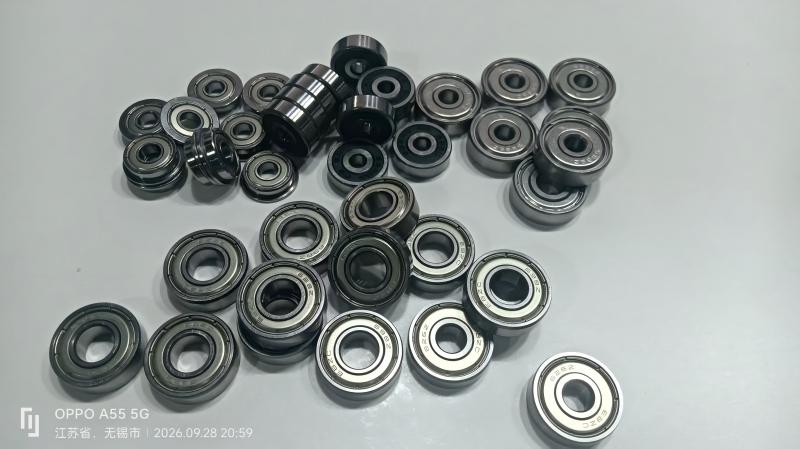
2. Flanged Miniature Bearings (F60 Series)
These bearings feature an integrated flange on the outer ring, simplifying axial location in the housing and eliminating the need for a separate retaining ring. Ideal for compact assemblies where space is at a premium.
3. Stainless Steel Miniature Bearings (SS / S Series)
Manufactured from 440C stainless steel (or AISI 304 for less demanding environments), stainless steel miniature bearings offer superior corrosion resistance. They are essential in medical devices, food processing equipment, marine applications, and any environment exposed to moisture or chemicals.
4. Hybrid Ceramic Bearings
Combining steel rings with silicon nitride (Si₃N₄) ceramic balls, hybrid miniature bearings run cooler, faster, and longer than all-steel alternatives. The ceramic balls are 40% lighter, non-magnetic, and electrically insulating — making them perfect for high-speed spindles, dental turbines, and precision instruments.
5. Open, Shielded & Sealed Configurations
Open (no suffix): Maximum speed, minimum friction; requires clean environment and external lubrication.
ZZ / 2Z (metal shields): Non-contact protection against large contaminants; suitable for high speeds.
2RS / RS (rubber seals): Contact seals provide superior contamination exclusion; slightly lower maximum speed.
Key Performance Parameters
When selecting a precision miniature bearing, the following parameters determine suitability:
Bore Diameter & Outside Diameter
Must match your shaft and housing dimensions. Standard 60 series dimensions are interchangeable across manufacturers.
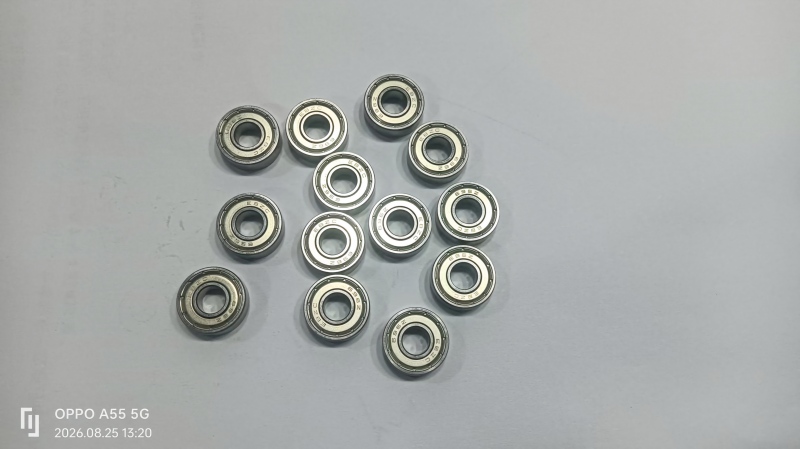
Radial Clearance (C2, C0, C3, C4, C5)
Internal clearance affects noise, vibration, heat generation, and load distribution. C3 (greater than standard) is commonly used for high-speed or high-temperature applications. C2 (less than standard) is preferred for precision positioning and low-noise environments.
Tolerance Grade (ABEC / ISO)
ABEC 1 / ISO P0: Standard precision
ABEC 3 / ISO P6: Medium precision
ABEC 5 / ISO P5: High precision (common for miniature bearings)
ABEC 7 / ISO P4: Ultra-precision (for spindles and instruments)
Higher precision grades deliver lower runout, smoother rotation, and consistent performance — at a higher cost.
Material
Chrome steel (GCr15 / AISI 52100): Standard, high hardness, excellent fatigue life.
Stainless steel (440C): Corrosion-resistant, slightly lower load capacity.
Ceramic hybrid: High speed, low friction, electrical insulation.
Lubrication
Miniature bearings are typically pre-lubricated with grease. The choice of grease determines speed capability, temperature range, noise level, and service life. For ultra-high-speed applications (e.g., dental handpieces), oil lubrication or special low-viscosity greases are required.
Typical Application Fields
Precision miniature bearings find their way into an extraordinarily diverse range of products:
Medical & Dental
Dental handpieces and turbines
Surgical power tools
Medical pumps and centrifuges
Endoscopy equipment
Industrial Automation & Robotics
Servo motors and stepper motors
Encoders and resolvers
Robot joints and end effectors
Linear guide systems
Aerospace & Defense
Control surface actuators
Gyroscopes and navigation systems
Optoelectronic pointing systems
UAV components
Consumer Electronics & Appliances
Hard disk drives (HDD) and optical drives
Cooling fans and blowers
Power tools (rotary tools, die grinders)
Vacuum cleaners and kitchen appliances
Office & Printing Equipment
Laser printers and copiers
Paper feed rollers
Scanners and fax machines
Hobby & Recreation
Skateboards, longboards, and inline skates
Fishing reels
Radio-controlled (RC) cars, drones, and boats
3D printers and CNC machines
How to Select the Right Miniature Bearing
Follow this step-by-step selection process:
Step 1: Define Your Operating Conditions
Shaft speed (RPM): Determines required precision grade, clearance, and lubrication.
Load magnitude & direction: Radial only, axial only, or combined?
Operating temperature range: Affects material, lubrication, and clearance.
Environment: Clean, dusty, wet, corrosive? Determines sealing and material.
Step 2: Choose the Bearing Series
60 series: General-purpose, good radial load, moderate axial load.
62 series: Higher load capacity, slightly larger cross-section.
63 series: Maximum load capacity for given bore, larger footprint.
Flanged (F60/F62): When axial location in housing is needed.
Step 3: Select Precision Grade
General machinery → ABEC 1 / P0 or ABEC 3 / P6
Motors, appliances, power tools → ABEC 3 / P6 or ABEC 5 / P5
High-speed spindles, instruments, medical → ABEC 5 / P5 or ABEC 7 / P4
Step 4: Select Material & Sealing
Standard environment → Chrome steel, ZZ shields or 2RS seals
Moisture / corrosion → 440C stainless steel
Ultra-high speed / electrical → Hybrid ceramic
Clean environment, max speed → Open bearing
Step 5: Verify Life Calculation
Use the basic rating life formula (L10 life) to confirm the bearing meets your required service life under actual loads. For critical applications, consult with your bearing supplier for a detailed life calculation.
Quality & Manufacturing: What Sets a Good Miniature Bearing Apart
The difference between a $0.10 miniature bearing and a $5 precision miniature bearing is invisible to the naked eye but decisive in performance:
1. Raw Material Consistency
Premium bearings use vacuum-degassed chrome steel (GCr15) with strictly controlled inclusion content. Cleaner steel means longer fatigue life and fewer premature failures.
2. Grinding & Superfinishing
Raceway surface finish directly affects noise, vibration, and wear. High-quality miniature bearings undergo multi-stage grinding and superfinishing to achieve mirror-like raceways (Ra < 0.05 μm).
3. Cage Design & Quality
A poorly made cage causes noise, vibration, and ball skidding. Precision miniature bearings use precision-stamped steel cages or machined polyamide (PA66) cages with consistent pocket geometry.
4. Lubricant Quality & Quantity
The right grease, applied in the correct quantity (typically 15–35% of free space), is critical. Too much grease causes churning and heat; too little causes premature wear.
5. Cleanliness in Assembly
Miniature bearings are assembled in controlled-environment clean rooms to prevent particulate contamination. Even a single dust particle can cause noise or premature failure in a bearing with 3 mm bore.
6. 100% Inspection
Quality suppliers perform 100% noise and vibration testing (using Anderon meters or similar) on miniature bearings, grading them by vibration level. This ensures every bearing meets specified noise criteria.
Common Questions & Answers
Q: Can I use a standard 608 bearing for a high-speed dental handpiece?
A: No. Dental handpieces operate at 300,000–500,000 RPM and require ABEC 7 / P4 ultra-precision ceramic hybrid bearings with special low-viscosity lubrication. A standard 608 bearing (typically ABEC 1–3) would fail within minutes at those speeds.
Q: What is the difference between ZZ and 2RS bearings?
A: ZZ (metal shield) bearings use non-contact metal shields that do not touch the inner ring — they allow higher speeds but offer limited contamination protection. 2RS (rubber seal) bearings use contact lip seals that provide superior contamination exclusion but generate more friction and have lower maximum speed ratings.
Q: How do I know if my miniature bearing needs replacement?
A: Signs of bearing failure include: increased noise or vibration, elevated operating temperature, reduced rotational smoothness, visible wear or discoloration, and reduced precision or runout. For critical applications, implement a preventive maintenance schedule based on operating hours.
Q: Can miniature bearings be re-lubricated?
A: Sealed (2RS) miniature bearings are generally lubricated-for-life and cannot be re-lubricated without damaging the seal. Shielded (ZZ) or open bearings can be re-lubricated, but in miniature sizes, the small grease volume makes this impractical for most users. It is usually more cost-effective to replace the bearing.
Q: What does "C3" clearance mean, and when do I need it?
A: C3 means the internal radial clearance is greater than the standard (C0) clearance. Use C3 when: operating at high speeds, operating at elevated temperatures (thermal expansion reduces clearance), or when the bearing is mounted with an interference fit on both the shaft and housing.
Custom & Non-Standard Miniature Bearings
While standard 60 series bearings cover most applications, some projects require custom solutions. At Jakstar Bearing, we support:
Custom dimensions: Non-standard bore, OD, or width
Special materials: Inconel, M50 tool steel, or other specialty alloys
Custom coatings: Black oxide, zinc-nickel plating, PTFE coating
Special lubricants: High-temperature, low-temperature, food-grade, or vacuum-compatible greases
Modified internal geometry: Custom contact angles, ball counts, or clearance ranges
Integrated features: Flanges, threads, mounting holes, or custom outer-ring profiles
If your application cannot be satisfied by a catalog bearing, contact our engineering team with your specifications. We can typically provide a custom solution within 15–30 days for prototype quantities.
Conclusion
Precision miniature bearings may be small, but their impact on the performance, reliability, and longevity of modern machinery is immense. Whether you are designing a high-speed dental handpiece, a precision servo motor, or a consumer appliance, selecting the right miniature bearing — with the correct precision grade, material, clearance, and lubrication — is a critical engineering decision.