Industry News
Latest Bearing Industry News & Solutions


Latest Bearing Industry News & Solutions
When an engineer selects bearings for medical instruments, pharmaceutical filling equipment or robotic joints, the bearing is seldom the most expensive component on the bill of materials. Even so, it often decides whether the whole device passes official validation, whether noise performance meets end-user requirements, and how long the maintenance cycle can be extended.
This buying guide is written for purchasing managers, mechanical designers and quality engineers who are comparing precision bearing suppliers. It covers four high-intent search terms that industrial buyers use daily: medical miniature ball bearings, pharmaceutical bearings, custom bearing design engineering, and how to screen a reliable automation bearings supplier without wasting months on repeated sample testing. It also shares a real view of what a Wuxi-based bearing supplier — located within one of the world’s densest bearing manufacturing clusters — can deliver for your project.
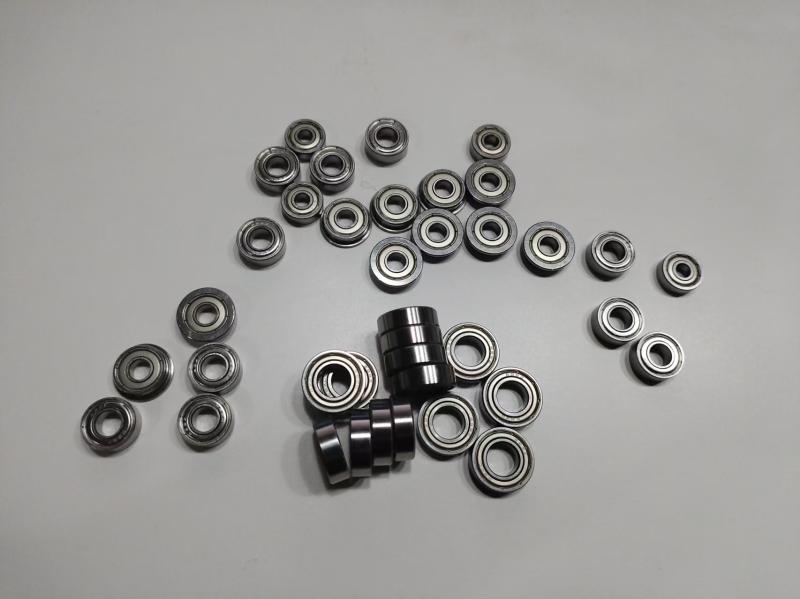
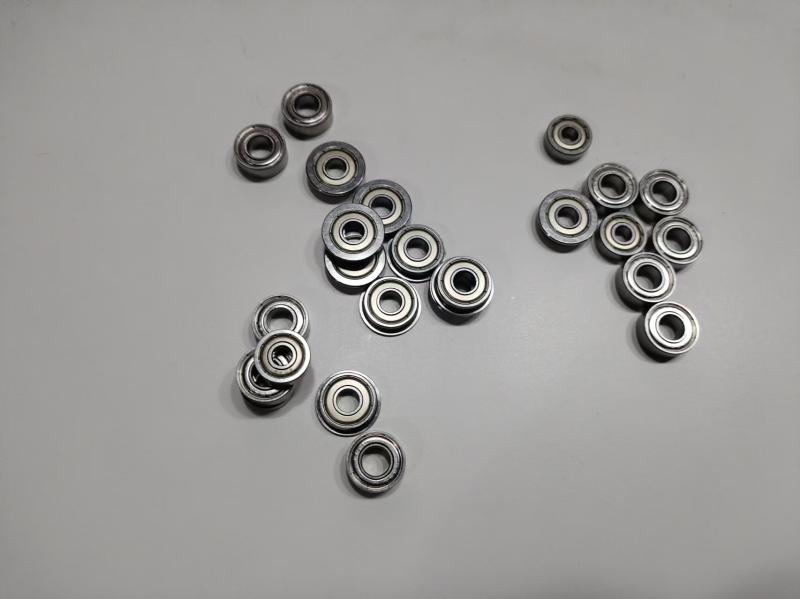
If you are looking for standard small precision bearings for motors and optical devices, our miniature deep groove ball bearings offer stable torque and consistent dimensional tolerance for mass assembly.
A miniature bearing with a 3 mm bore costs only a small amount, yet a single failure inside an infusion pump or diagnostic analyser can trigger costly product recall risks. This gap between low component cost and high failure consequence makes miniature bearings one of the most strictly controlled categories in the bearing industry.
Miniature small bearings, generally with bore sizes ranging from 1 mm to 30 mm, are widely used in dental turbines, surgical handpieces, insulin pumps, ventilator blowers, lab analysers, ophthalmology devices, optical scanners, drone gimbals, brushless DC motors, printer slides and robot end effectors. In these applications, the bearing acts as a critical system component:
Noise and vibration directly affect the user experience of handheld medical instruments
Stable running torque preserves battery life for portable devices and ensures positioning accuracy
Cleanliness level decides whether the assembly can pass bioburden and sterile field requirements
Lubricant formulation defines high-speed service life and compatibility with surrounding plastic or elastomer parts
Batch-to-batch dimensional consistency keeps your automated assembly line running smoothly
This is why miniature bearing procurement cannot be treated as a simple commodity purchase. Two suppliers with the same nominal part number may deliver completely different performance, and the difference usually comes from three core factors: raceway geometry control, ball grade selection, and precise lubricant dosage.
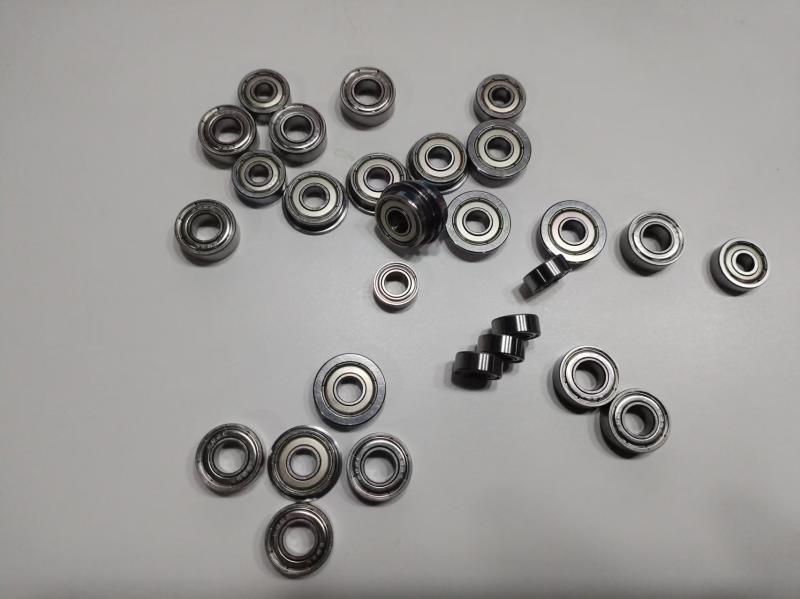
In practice, most miniature bearing enquiries we receive at our Wuxi workshop come from customers who have tested two or three other vendors already. The most common problems they meet are mismatched ball grades, unstable grease filling volume across batches, and raceway surface finish that fails to match drawing requirements. Checking these three points before quotation is the key difference between a supplier qualified for medical projects and a supplier that only sells part numbers.
A qualified medical miniature ball bearing is not defined by a universal standard. The “medical grade” label is built on a set of custom requirements from your device: cleanliness, noise performance, long-term reliability, sterilisation compatibility and complete traceability.
Bearings used in devices touching body fluids or working inside sterile environments need assembly under controlled clean conditions with clear particulate limits. Buyers should confirm these points in advance:
Assembly and packing environment class provided in written form
No free lubricant remaining on outer surfaces, as excess grease attracts particles and creates contamination risk
Individual separate packing instead of bulk bags, to avoid cross-contamination for the whole batch
Fixed cleaning and degreasing workflow for bearings that will be re-lubricated by your production team
For wearable and handheld medical equipment, noise is a formal performance indicator. Two factors dominate the noise test: ball precision grade and raceway roundness & surface finish. For critical medical part numbers, we recommend 100% vibration inspection for every finished unit, with acceptance criteria locked against approved reference samples.
Medical projects often require special configurations:
Non-toxic, pharmacopoeia-compliant lubricants; dry coating operation is also available for certain scenarios
Stainless steel rings and balls (AISI 440C as mainstream, 316L for higher corrosion resistance)
Silicon nitride or zirconia ceramic balls for non-magnetic or insulation requirements
PEEK or polymer cages when metal wear debris cannot be accepted
Sterilisation method matching: EO, gamma radiation or autoclave steam will all interact with grease and cage materials. A grease suitable for room-temperature use may degrade quickly after repeated steam cycles.
For validated medical devices, you will need complete device history records in future audits. Your bearing supplier must link each delivered lot to material certificates, heat numbers, inspection reports, lubricant batch information and assembly dates. Without this traceability chain, the bearing cannot be used for regulated medical projects no matter how low the price.
Reliable suppliers provide dimensional test reports and inspection records as standard deliverables, not optional extra services. All medical and pharma orders go through our strict bearing inspection and quality control process, with independent batch files stored for every production lot.
For medical and pharmaceutical projects specifically, we archive separate batch documents at our Wuxi site, recording material heat numbers, ball grades, lubricant batches, inspection results and packing dates. Buyers building device history records can apply for these files for any delivered lot, so traceability is not lost years after order completion.
Pharmaceutical bearings are installed on equipment where contamination or unexpected shutdown can ruin entire production batches. Typical application positions include tablet press turrets, capsule filling stations, blister packaging rollers, vial washing and filling conveyors, capping assemblies, label applicators and cleanroom air handling systems.
Four core requirements govern pharma bearing selection:
Corrosion and washdown resistancePharmaceutical equipment is cleaned regularly with IPA, detergent and sometimes weak acid or alkaline cleaners. Standard chrome steel bearings with thin grease layers will fail quickly. Stainless steel rings, ceramic balls, polymer cages and NSF registered food-grade lubricants are the baseline choice.
Low particle performance in cleanroomsIn ISO 7 or ISO 8 cleanrooms, bearings that shed lubricant or release fine particles will trigger environmental monitoring non-conformities. Low-outgassing grease, controlled fill quantity and non-contact shields are preferred when running torque must stay low.
Washdown and dry-run toleranceBearings exposed to direct spray use sealed stainless constructions. For equipment cleaned frequently, suppliers can design lubricant retention structures to stabilise relubrication intervals.
Change control and documentationPharmaceutical manufacturers run strict component change control. A supplier that silently switches cage material or grease formula creates huge compliance risks. Always ask: will you notify us in writing before changing any material or lubricant for this part number? The answer matters more than catalogue data.
Customer validation: fit test, torque test, life test, corrosion test and clean cycle test as required
Design freeze: any later material, lubricant or cage change requires written notification and customer approval
Mass production with control plan: define critical characteristics, sampling frequency and record retention rules
Two practical tips: never set precision class as “as high as possible”. Excessive precision raises cost and lead time without extra reliability. Also, confirm your drawing contains clear tolerances; many RFQs stall because buyers only send 3D models without tolerance definitions.
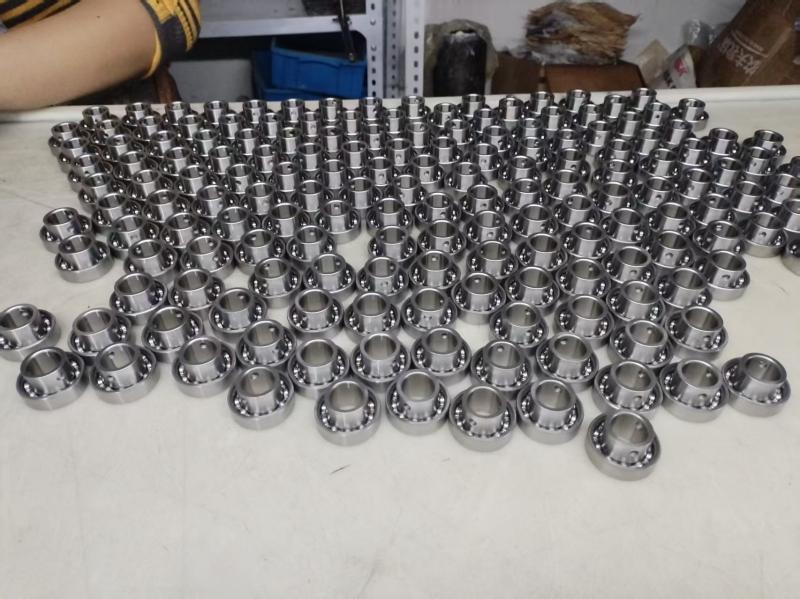
On custom projects, we split quotations into two versions: modified standard geometry and fully new design. Modified versions have lower tooling cost and faster lead time, ideal for prototype validation; brand-new internal designs are only recommended when standard variants cannot meet load or space constraints. Separating two options at the beginning saves repeated negotiation. Our team accumulates rich experience in custom and non-standard bearing manufacturing for medical, automation and precision instrument customers.
Wuxi and Jiangsu province form one of the most complete bearing industrial clusters in China. The concentrated grinding, assembly and testing supply chain allows local suppliers to provide wide size coverage, flexible MOQ for standard bearings, affordable tooling cost for minor modifications and fast sample turnaround compared with European and American vendors.
Before releasing volume orders, verify these points:
Confirm whether your parts are produced in the declared workshop or outsourced
Preview the actual format of quality certificates and batch inspection reports
Material certificates traceable to heat numbers
Pilot lot test results instead of only single prototype test data
Check the validity and scope of all certificates
Professional suppliers welcome these verification questions. Vague and evasive replies are an early warning signal.
Handheld wearable medical device: stainless miniature bearing, ceramic balls for insulation/corrosion resistance, low-noise controlled grease fill, 100% vibration screening, individual packing
Dental turbine & surgical handpiece: high-speed miniature bearing, high-grade balls, low-torque medical grease, sterilisation compatibility verified
Pharmaceutical filling & packaging line: stainless or coated rings, washdown suitable shields/seals, food-grade lubricant, formal change control
Robot joint & actuator: thin-section miniature bearing, preload and clearance controlled, consistent running torque batch by batch
General automation motion system: matched precision grade, stable lead time, drawing review and pilot lot before mass production
Can you supply small quantities for lab testing?Yes, both standard and custom bearings support sample orders. Samples use the same production process as formal batches and come with dimensional and material documents to support reliable testing.
How long does custom bearing development take?Simple modifications of existing geometry can finish drawing proposal quickly, with prototypes ready shortly. A fully new bearing design with life cycle validation will take longer. The timeline depends on how close your requirement is to existing parts.
Do you supply metric and inch series bearings?Yes. Inch miniature and thin-section bearings are popular for North American and Israeli customers, while metric sizes are widely used in Europe and Asia.
How do you select lubricants for medical and pharmaceutical bearings?Lubricant is selected according to working temperature, speed, cleaning environment and material compatibility. We confirm grease choice in writing with customers before production, and treat lubricant grade as a controlled characteristic.
What is your MOQ?Standard bearings and custom bearings apply different MOQ rules. Share your annual estimated consumption and target price, we will quote MOQ and lead time together.
Whether you are sourcing medical miniature ball bearings for diagnostic instruments, pharmaceutical bearings for filling lines, launching a custom bearing design engineering project for compact actuators, or seeking a stable long-term automation bearings supplier, the core evaluation criteria stay consistent: auditable quality records, proactive engineering feedback on drawings, samples made using mass-production workflows, and transparent written communication for all specification changes.
Send your drawing or application description with estimated annual volume and target price, and you will receive a professional technical proposal and quotation instead of a generic catalogue attachment.
Contact: info@jakstarbearing.com
Website: jakstarbearing.com