Industry News
Latest Bearing Industry News & Solutions


Latest Bearing Industry News & Solutions
Introduction: Why the 696 Bearing Series Matters
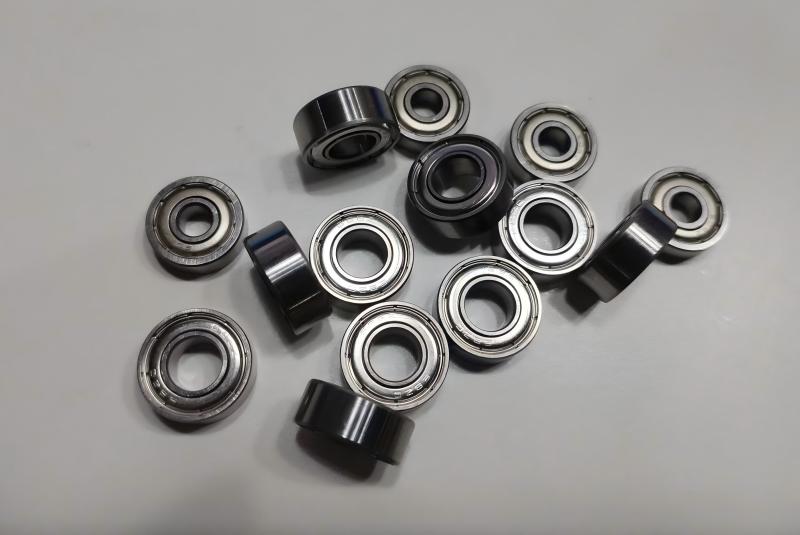
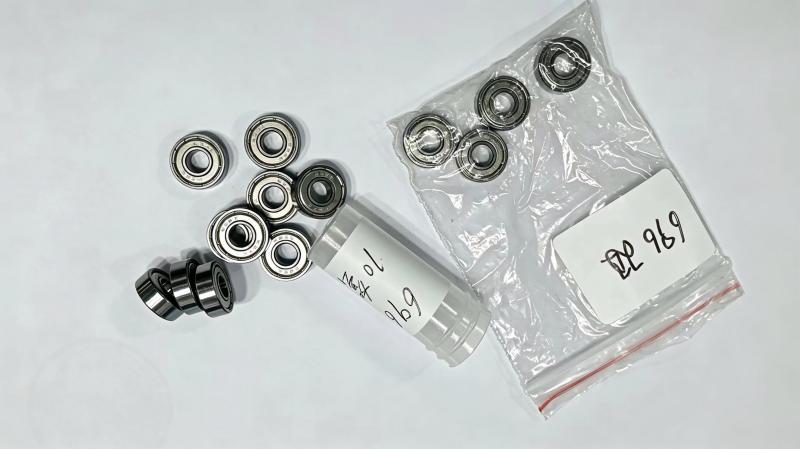
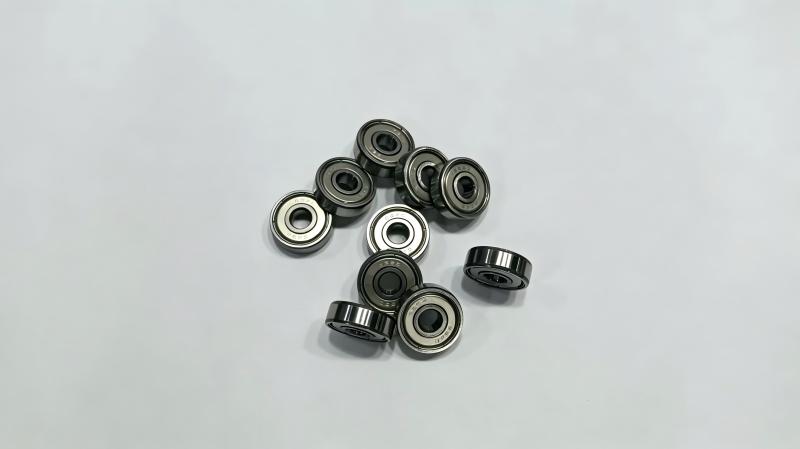
In the world of precision engineering, the 696 micro bearing is one of the most versatile and in-demand components on the market. With standardized dimensions of 6mm bore × 15mm outer diameter × 5mm width, the 696 series sits at the sweet spot between compact size and reliable load capacity.
But here's what most buyers don't realize: not all 696 bearings are created equal. Whether you're sourcing bearings for handheld power tools, specifying miniature medical bearings for surgical devices, or looking for custom bearing sizes to fit a non-standard housing, the difference between a quality 696 and a subpar one comes down to materials, precision grade, sealing, and — perhaps most importantly — your supplier.
In this guide, we'll cover everything you need to know: from the technical advantages of the 696 series, to real-world applications across industries, to how to choose a supplier you can trust. We'll also address common search queries we hear from engineers and procurement professionals every day, including bearing design services, custom babbitt bearing from sample (no drawings required), bearings for home appliances, medical device bearings, medical miniature ball bearings, and non-standard bearings
Part 1: The Core Advantages of 696 Precision Micro Bearings
1.1 Dimensional Standardization with Design Flexibility
The 696 bearing follows the ISO 15 series metric standard (6×15×5mm), which means it is a drop-in replacement for thousands of existing designs. This standardization is a huge advantage for manufacturers of home appliances and handheld power tools, where supply chain stability and interchangeability are critical.
But standardization doesn't mean limitation. A precision 696 bearing can be customized in terms of:
Internal clearance (C0, C2, C3, C4)
Lubricant type and quantity
Shield or seal material
Retainer / cage design
ABEC precision class
This flexibility is exactly why engineers searching for custom bearing sizes and non-standard bearings often start with a 696 platform and modify from there.
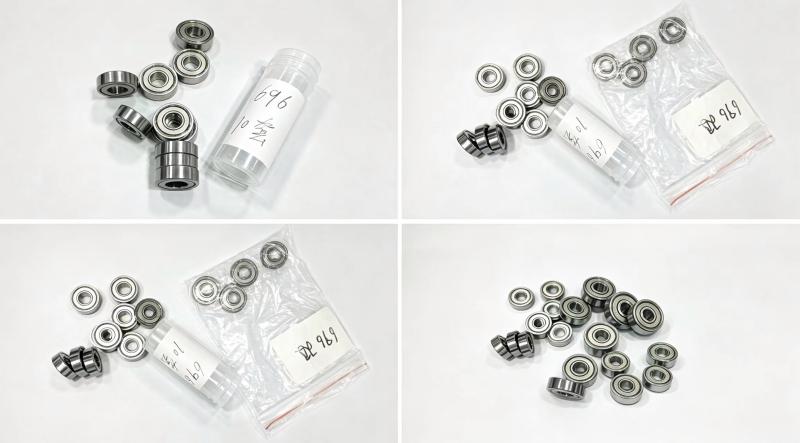
Material selection is the single most important factor in bearing longevity. Here's how the three main material paths compare:
| Material | Best For | Key Benefit |
| Chrome Steel (GCr15 / 52100) | Power tools, appliances, motors | Maximum hardness & wear resistance |
| Stainless Steel (440C / 420) | Medical devices, food equipment | Corrosion resistance |
| Hybrid Ceramic (Si₃N₄ balls) | High-speed, high-temperature apps | Lightweight, low friction, electrically insulating |
For miniature medical bearings and medical device bearings, 440C stainless steel is the gold standard. It withstands repeated sterilization cycles, resists bodily fluids, and meets FDA and ISO 13485 requirements. For handheld power tools — think angle grinders, rotary hammers, and compact drills — chrome steel with a robust cage design delivers the impact resistance and high-RPM stability you need
1.3 Precision Grades: ABEC-1 to ABEC-7
Precision isn't just a buzzword; it directly affects noise, vibration, heat, and service life.
ABEC-1 / ABEC-3: Standard grade. Suitable for home appliances like washing machine drums, fan motors, and blender spindles.
ABEC-5: Precision grade. The sweet spot for handheld power tools and mid-range medical equipment. Tighter tolerances mean less runout and quieter operation.
ABEC-7: Ultra-precision. Required for medical miniature ball bearings in surgical drills, dental handpieces, and diagnostic instruments.
When a buyer searches for medical miniature ball bearing, they are almost always looking for ABEC-5 or higher, with noise ratings of Z2 or Z3, and often with specialized lubrication for low-torque, high-speed operation.
1.4 Noise, Vibration & Torque Control (NVH)
In medical and consumer applications, NVH performance can make or break a product. A precision 696 bearing is graded on vibration levels:
Z1 / V1: General purpose
Z2 / V2: Low noise — ideal for home appliances
Z3 / V3: Very low noise — required for miniature medical bearings
Z4 / V4: Ultra-quiet — surgical and dental applications
Low rotational torque is equally critical. For battery-powered handheld power tools, a bearing with controlled starting torque ensures smooth startup under low voltage, maximizing battery life and user experience.
1.5 Sealing & Protection: ZZ vs. 2RS
The suffix on your 696 bearing determines its sealing strategy:
Open (no shield): Used when the bearing runs in an oil bath or clean vacuum environment.
ZZ (metal shields): Non-contact protection. Best for high-RPM applications like power tool motors and dental drills where friction must be minimized.
2RS (rubber seals): Contact seals. The go-to for home appliances and outdoor equipment where dust, moisture, or debris is a concern.
Start by classifying your use case. Here are the most common categories we see from real customer inquiries:
Bearings for handheld power tools → Focus on impact resistance, high RPM, and heat dissipation.
Miniature medical bearings / medical device bearings → Focus on corrosion resistance, ultra-quiet operation, and biocompatibility.
Bearings for home appliances → Focus on cost-efficiency, low noise, and long service intervals.
Medical miniature ball bearings → Focus on ABEC-5/7, stainless steel, and precision lubrication.
Non-standard bearings → Focus on custom dimensions, special materials, or unique load profiles.
| Parameter | Low | Medium | High |
| Radial Load | Small instruments | Appliance motors | Power tools |
| Axial Load | Negligible | Light thrust | Moderate thrust |
| Speed (RPM) | < 5,000 | 5,000–30,000 | 30,000+ |
For high-speed applications, prioritize ceramic hybrid balls, metal shields (ZZ), and light instrument oil. For high-load applications, choose chrome steel, ABEC-5+, and a robust nylon or phenolic cage.
General purpose grease: Home appliances, fans, pumps.
High-speed grease (e.g., Kyodo Yushi): Power tools, RC motors, drones.
Low-torque oil: Medical devices, miniature instruments.
High-temperature grease: Industrial ovens, autoclaves.
Solid / dry film: Vacuum or extreme environment applications.
Clean indoor environment → Open or ZZ
Dusty / outdoor → 2RS
Washdown or sterilization → 2RS with stainless steel
Appliance / general motor → ABEC-1 to ABEC-3
Power tool / precision motor → ABEC-5
Medical / dental / instrument → ABEC-5 to ABEC-7
Not every design fits a standard 6×15×5 envelope. That's where custom bearing sizes come in. A capable manufacturer can adjust:
Bore diameter (e.g., 6.35mm instead of 6mm)
Outer diameter (e.g., 16mm instead of 15mm)
Width (e.g., 6mm instead of 5mm)
Corner radii, chamfers, and raceway geometry
If your application requires a unique envelope, look for a supplier that offers bearing design services and can produce prototypes within 2–4 weeks.
One of the most common challenges we hear from customers is: "I have an old bearing, but no drawings." This is especially true for legacy equipment, vintage machinery, and imported tools.
The solution: custom babbitt bearing from sample (no drawings needed). Here's how the process works:
Send us the sample: Ship your worn or broken bearing to the manufacturer.
Reverse engineering: Using coordinate measuring machines (CMM) and optical comparators, the supplier measures every critical dimension.
Material analysis: Spectrometer testing identifies the alloy composition, including babbitt layer thickness and hardness.
Prototyping: A first-article sample is produced for fit-check and testing.
Production: Once approved, full production runs are completed with documented quality control.
This service is invaluable for rebuilding vintage motors, restoring industrial equipment, and supporting obsolete machinery where OEM parts are no longer available.
Non-standard bearings go beyond simple dimensional changes. They may involve:
Special flange configurations
Integrated shaft or housing features
Unusual ball complements (e.g., full-ball designs)
Exotic materials (beryllium copper, Inconel, titanium)
Hybrid designs combining rolling elements with plain bearing surfaces
If your design pushes the boundaries of what a standard 696 can do, a bearing design service can help you engineer a solution from the ground up.
Handheld power tools — including cordless drills, angle grinders, rotary tools, and sanders — place extreme demands on micro bearings. Key challenges include:
High rotational speeds (20,000–50,000 RPM)
Shock and impact loads from dropping or pressing
Heat buildup from continuous use
Dust and debris ingress
Recommended specification:
696 ZZ or 2RS, ABEC-3 to ABEC-5
Chrome steel (GCr15) races and balls
Nylon or phenolic cage
High-speed grease (NLGI 2)
Optional: rubber seals for dust-heavy environments
Medical applications are the most demanding of all. Whether it's a surgical drill, a centrifugal blood pump, or a robotic surgical arm, medical device bearings must meet stringent requirements:
Biocompatibility (ISO 10993)
Autoclavability (repeated steam sterilization at 134°C)
Ultra-low noise and vibration
Zero particulate shedding
Recommended specification:
696 2RS or open, ABEC-5 to ABEC-7
440C stainless steel
Glass or ceramic balls (for imaging compatibility)
Medical-grade, low-torque oil lubrication
Cleanroom assembly and packaging
Bearings for home appliances prioritize cost-effectiveness, quiet operation, and long life. Typical uses include washing machines, refrigerators, air conditioners, vacuum cleaners, and kitchen blenders.
Recommended specification:
696 ZZ, ABEC-1 to ABEC-3
Chrome steel
Steel or nylon cage
General-purpose lithium grease
Noise grade Z2 minimum
Medical miniature ball bearings deserve a category of their own. These are the tiny, high-precision components inside dental handpieces, laparoscopic tools, insulin pumps, and hearing aids. They often require:
Inner diameters below 6mm (e.g., 684, 685, 693, 694 series)
ABEC-7 precision
Stainless steel or ceramic materials
Lubricants compatible with body contact or imaging environments
Part 5: How to Choose a Reliable Bearing Supplier
The bearing is only as good as the company that made it. Here's a practical checklist for vetting suppliers — especially when you're searching for bearing design services, custom babbitt bearing from sample, or any non-standard bearings.
Do they own the full production line (grinding, lapping, assembly, cleaning)?
Can they handle both mass production and small-batch prototyping?
Do they have in-house tooling and fixture design?
ISO 9001: Basic quality management (essential).
IATF 16949: Required for automotive supply chains.
ISO 13485: Required for medical device components.
Material Test Certificates (MTC): Available for every batch?
A serious precision bearing manufacturer should have:
Roundness testers (for raceway geometry)
Surface roughness testers (Ra values)
Vibration and noise grading machines (Z1–Z4)
Bearing life test rigs (L10 validation)
Coordinate Measuring Machines (CMM) for custom and non-standard bearings
Can the supplier help you solve problems, not just fill orders?
Free bearing design services?
Reverse engineering for custom babbitt bearing from sample (no drawings)?
FEA analysis for load and fatigue?
3D CAD models and technical drawings on request?
One perfect sample is meaningless if the production run varies. Ask:
How often are grinding wheels dressed/replaced?
What is the process for heat treatment distortion control?
Is statistical process control (SPC) used on critical dimensions?
Standard items in stock?
MOQ flexible for prototyping?
Lead time for custom and non-standard bearings?
Export packaging and global shipping experience?
Prices far below market average (recycled steel, poor heat treatment)
No noise or vibration test data
Cannot provide material certificates
No warranty or returns policy
Vague answers about country of origin
Over-greasing sealed bearings: Adds drag and heat; factory lube is usually optimal.
Pressing on the wrong ring: Always press the ring that is being fitted; never transfer load through the balls.
Ignoring shaft tolerances: Too loose = creep; too tight = preload and heat.
Mixing old and new bearings: Always replace in pairs to avoid differential wear.
Touching raceways with bare hands: Skin oils cause corrosion, especially on stainless steel medical bearings.
Conclusion: The Right Bearing, the Right Partner
The 696 precision micro bearing is a remarkable piece of engineering — but only when specified correctly and sourced from a trustworthy manufacturer. Whether your priority is bearings for handheld power tools, miniature medical bearings, bearings for home appliances, medical device bearings, medical miniature ball bearings, or fully custom bearing sizes, the principles remain the same:
Match the material to the environment.
Match the precision grade to the performance requirement.
Match the sealing and lubrication to the operating conditions.
Match the supplier to your long-term quality and support needs.
And if your project doesn't fit a standard catalog number? That's where bearing design services, custom babbitt bearing from sample (no drawings required), and non-standard bearings come in. The right manufacturing partner will help you engineer a solution — not just sell you a part.
Need Help Selecting Your 696 Bearing
If you're unsure which specification is right for your application, our engineering team is here to help. We offer:
✅ Free technical consultation
✅ Bearing design services for custom applications
✅ Custom babbitt bearing from sample — no drawings required
✅ Fast prototyping of custom bearing sizes and non-standard bearings
✅ Full range of 696 precision micro bearings in stock
Contact us today for free samples, technical datasheets, and a competitive quote. Let's keep your world spinning — precisely.