Industry News
Latest Bearing Industry News & Solutions


Latest Bearing Industry News & Solutions
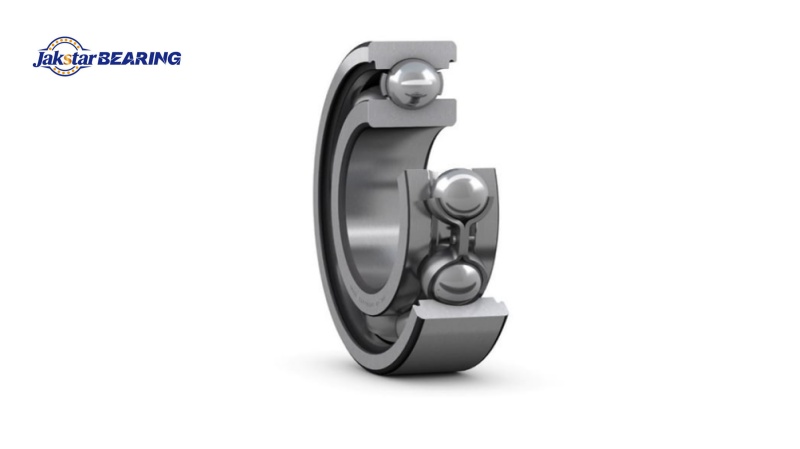
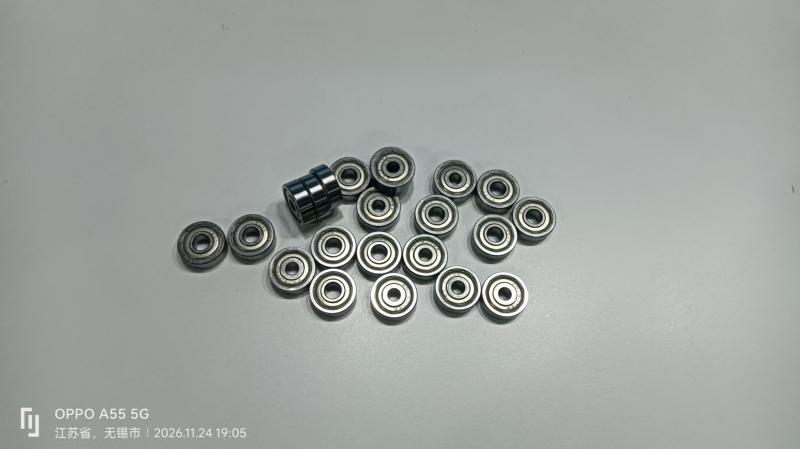
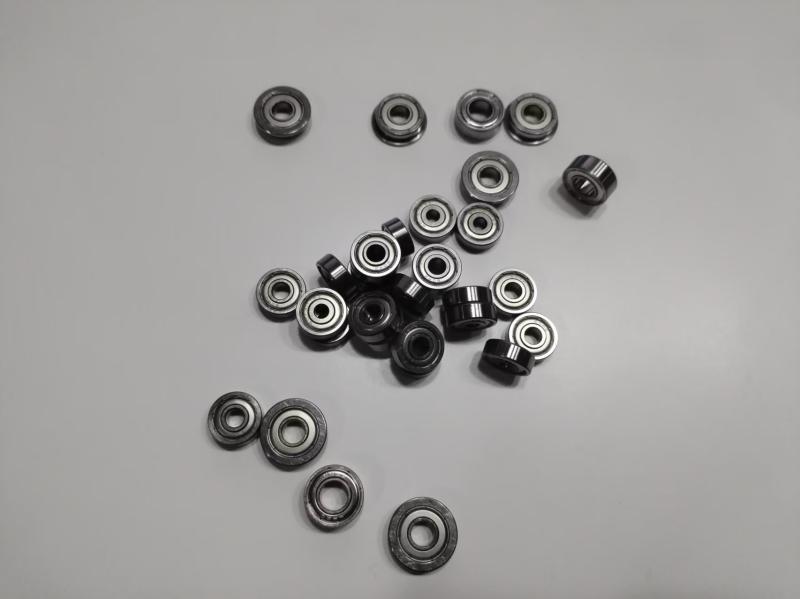
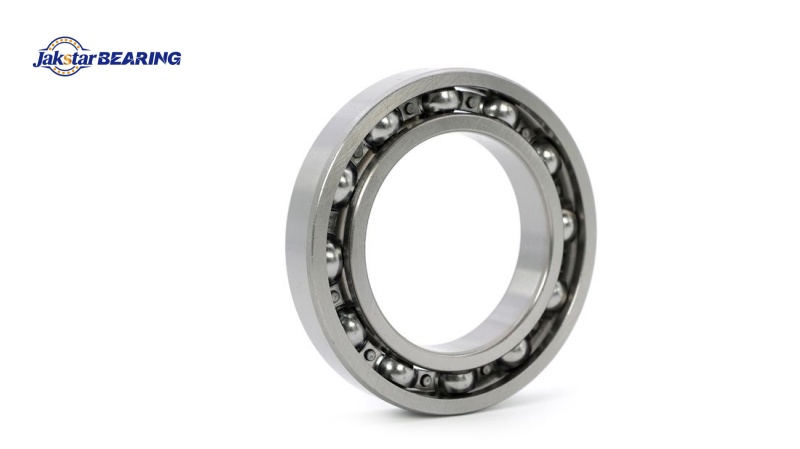
The 625 open type deep groove ball bearing is one of the highest-volume sizes in the miniature bearing range, with standard dimensions of 5 mm bore, 16 mm outer diameter and 5 mm width. It belongs to the single row deep groove ball bearing family: a symmetrical deep-groove raceway, multi-point contact between balls and races, and the ability to carry radial loads plus moderate axial loads in both directions.
Unlike tapered roller or angular contact designs, a deep groove structure produces low friction, low starting torque and low running noise, which is why almost every compact assembly that needs smooth rotation starts with this configuration. The 625 is the small-size member of that family and appears widely in low-power motors, precision instruments, office equipment and model power systems.
Whether you choose open or sealed often matters more to service life than the size itself. That is the focus of this article.
An open type deep groove ball bearing has no shield and no rubber seal, so the balls and raceway sit directly inside the housing cavity. Its advantages are not about price; there are three practical ones.
First, lubrication access is the best available. Oil or grease reaches the raceway directly, and relubrication needs no cover removal, which makes scheduled maintenance simple. In precision equipment that must be greased periodically, this alone decides maintenance cost.
Second, heat dissipation is strong. High-speed rotation generates heat inside the bearing, and an open design lets oil and airflow carry it away without a cover in the way, so temperature rise is clearly lower than a sealed unit of the same size. This is exactly why so many high speed miniature deep groove ball bearing solutions are supplied in open configuration.
Third, rotational drag is minimal. Without seal lip friction, no-load starting torque is smaller, which suits servo feedback control and tension control, the classic deep groove ball bearings for low friction systems case.
The trade-off is equally clear: no physical barrier means dust, coolant and moisture can enter the raceway directly. Once contamination arrives, grease degrades much faster and noise and vibration rise quickly. An open bearing therefore assumes either a protected housing cavity or a reasonably clean working condition.
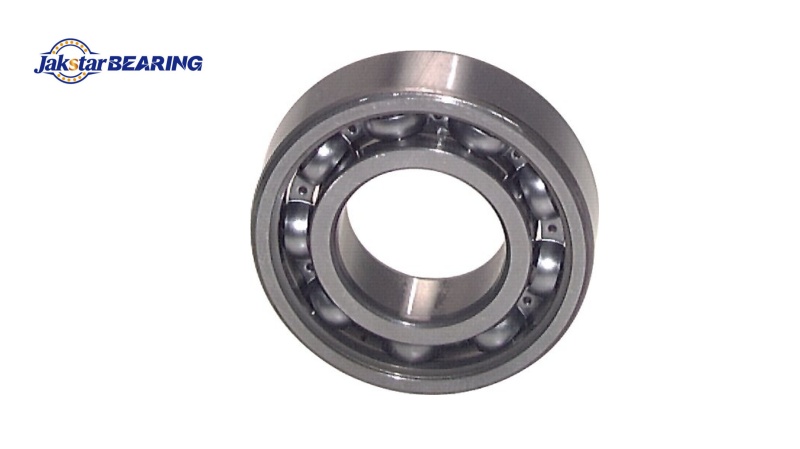
Miniature bearings behave similarly at low speed and light load; the differences show up at high speed, high rigidity and strict noise limits.
Deep groove ball bearings P4 accuracy grade correspond to ISO tolerance class P4, with noticeably tighter dimensional and running accuracy. Raceway roundness, face runout and radial runout are held within a narrow band. A P4 bearing runs with less vibration and more consistent noise at high speed, making it standard for spindles, precision motors and optical rotary stages.
Deep groove ball bearings ABEC-9 precision represent the highest production grade in the ABEC system, with an even tighter tolerance band. ABEC-9 is normally used for very high speed, very low noise and extremely small runout, such as dental handpieces, precision measuring tables and high-resolution scanning mechanisms. Note that ABEC only defines dimensional and running accuracy, not material, noise, life or lubrication. ABEC-9 does not automatically mean a better part; it must be judged together with material, cleanliness and grease.
For ordinary motors, printer rollers and model power units, P0 or P6 is sufficient. Upgrade to P5 or P4 only when high speed or low noise is a core requirement; jumping to ABEC-9 without a reason usually only adds cost.
A conventional miniature deep groove ball bearing uses high-carbon chrome bearing steel hardened to roughly HRC 60–65, offering good load capacity and low cost, the default for most indoor applications.
Stainless steel deep groove ball bearings use martensitic stainless steel with clearly better corrosion resistance, suitable for humid areas, frequent washing and light acid or alkaline mist, for example small food machinery parts, medical pumps and outdoor instruments. The cost is slightly lower load rating and limiting speed than chrome steel of the same size, and dimensional stability is more sensitive to heat treatment.
High temperature deep groove ball bearings require three problems solved together: heat stability of rings and balls, cage material and lubricant temperature resistance. Standard lithium grease degrades quickly above 120 °C, so even a temperature-resistant bearing loses life fast once the lubricant fails. High temperature duty usually needs a special cage plus high-temperature grease or solid lubrication, and internal clearance must be recalculated because temperature rise consumes the original clearance.
Three structures serve three duty conditions, and choosing wrongly hurts more than choosing expensively.
Open: no cover, best heat dissipation, easy relubrication, lowest torque, correct for clean cavities with a maintenance plan.
Shielded deep groove ball bearing: a metal dust cover with a labyrinth gap blocks most solid particles while keeping friction low, and speed capability stays close to open. It is the most common compromise in motors, fans and office equipment.
Contact rubber seal (2RS): the seal lip touches the inner ring, giving the strongest dust and water protection but clearly higher friction torque and temperature rise. Sealed units such as deep groove ball bearings 6205 2RS sealed are widely used in pumps, gearboxes and outdoor equipment that must run maintenance-free for long periods.
The decision logic is simple. Clean cavity with planned maintenance: open. Dusty but high speed required: metal shield. Moisture, oil contamination or long maintenance intervals: contact seal.
Deep groove ball bearings for electric motor shafts are the main application. Front and rear supports of miniature brushless motors, gimbal motors, fan motors and robot joint motors almost always use the single row deep groove structure. Open 625 units commonly appear in label printer feed rollers, scanner drive shafts and small servo reduction mechanisms.
Dental high-speed handpieces are another classic case, running tens of thousands of rpm with extremely small runout, low noise and repeated autoclave cycles, typically using high-precision miniature open or semi-open bearings with special grease.
In the general context of deep groove ball bearings in rotating machinery, applications also include optical focusing mechanisms, instrument rotary heads, small centrifuges, automated indexing tables, AGV idler wheels and miniature conveyor rollers. What they share is modest load combined with sensitivity to smoothness and noise, which the deep groove structure matches well.
As for deep groove ball bearings in heavy load applications, a miniature size like the 625 is not suitable; heavy duty needs a larger section and higher capacity. Within the same structural family, medium and large deep groove bearings can carry moderate radial loads, but equivalent dynamic load and rating life must be calculated rather than estimated by experience.
Deep groove ball bearings in wet environment conditions need extra care. Moisture inside the raceway destroys the oil film, metal contacts directly, and corrosion followed by pitting appears. If moisture cannot be avoided, the correct approach is stainless material, a contact seal, water-resistant grease, and a drainage-friendly mounting design. Relying on an open structure with ordinary grease usually cannot guarantee life.
To specify an open 625 bearing, confirm six items in order: installation space and size, load type and magnitude, speed and temperature rise, cleanliness and humidity, precision and noise requirement, maintenance interval. Once these six are fixed, material, precision grade and sealing type are essentially determined. Starting from a part number and then adjusting the duty conditions almost always creates a life problem.
If you are selecting bearings for miniature motors, printers, optical instruments or precision drive mechanisms and need support on the 625 open type deep groove ball bearing, including P4 or ABEC-9 precision, stainless steel and high temperature versions, send us your drawing or working conditions. We can recommend the matching specification based on actual speed, load and environment